Catch up now
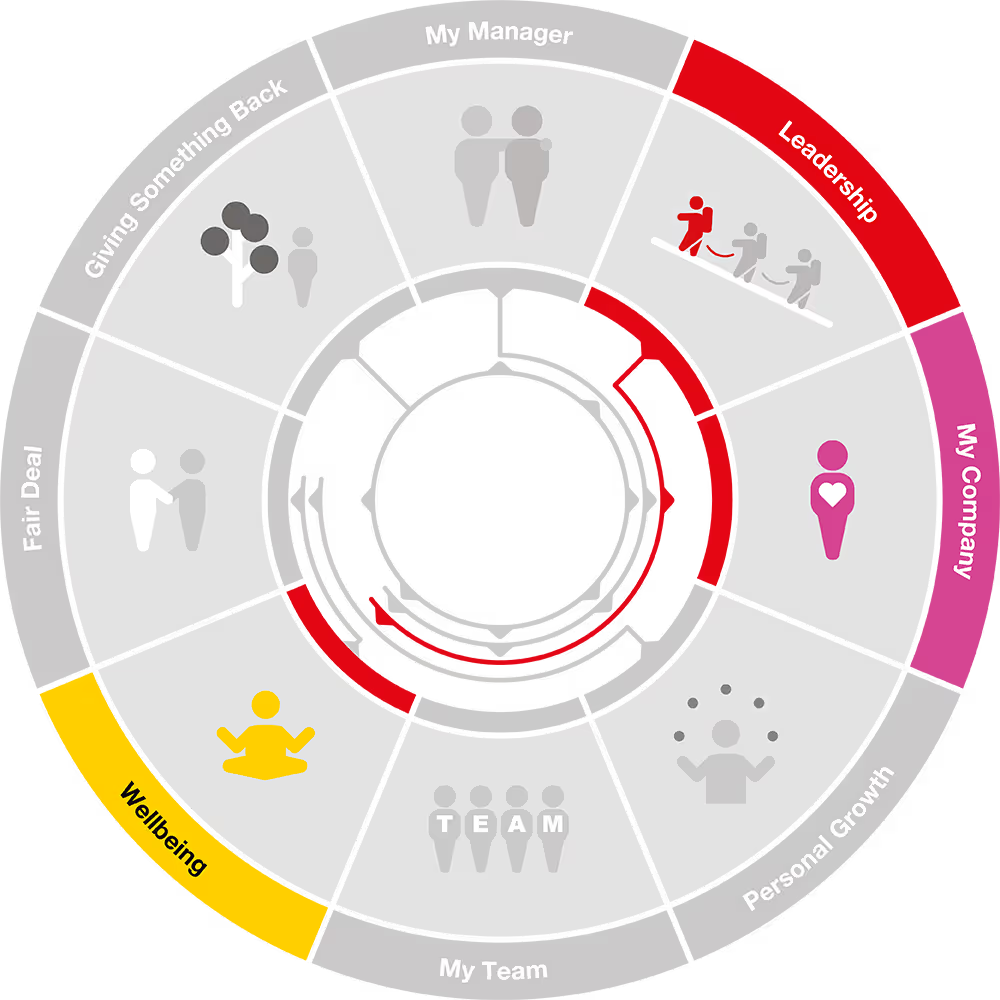
Leadership - How employees feel about the head of the organisation, senior management and the organisation's values and principles
Leadership has the biggest influence on how employees feel about the organisation.
Leaders need to create inspiring visions and provide clear direction to positively Impact the My Company factor.
When it comes to Wellbeing, no amount of free fruit or stress busting classes are going to address an imbalance. Employee Wellbeing is a by-product of the leadership and management culture.
If there’s pressure at the top of your organisation, it won’t take long to be felt throughout.


Company information and success is shared with all in the organisation, so as to enable decision making processes and also show the bigger picture of working towards a common goal. Creditcall's CEO runs entire staff updates on average 3 to 4 times per year, where free lunch is provided, and various people in the company present what is going on in their part of the organisation. Their CEO also has regular monthly meetings with all the other various managers and this information is then disseminated to other team members. In addition, the company has an open door policy and all staff are encouraged to ask questions on anything they don't understand. There is also a ‘no blame culture' at the company. All colleagues are treated as equal, no matter of any other factors and encouraged to come up with new innovative and efficient ways of dealing with any work challenges they face.
Regular, and whenever necessary, daily meetings are held to discuss objectives, progress and obstacles. Underlying these meetings is the philosophy that it is the managers' responsibility to ensure that their reports have the best possible environment in which to succeed. Notice is also taken of individual working preferences and where possible these are accommodated. The current flexi time policy was a direct result of manager feedback and a desire by the company to accommodate individual preferences. The company ethos is to demonstrate how they are all working towards a common goal and how all the various working parts are vital to the overall success. Informally, managers are encouraged to hold informal sessions with their team or individuals within the team if they see any signs of under performance or symptoms of any kind of problems and difficulty.
All staff have flexi-time options and just have to be in the office for the core hours of 10.00am-4.00pm. Other than that, staff can come in as early as 8.00 am and stay as late as 6.00pm as long as they do a minimum of their allocated 7 hours per day for their 35 hour week. Any type of medical appointment i.e. doctor/dentist are also no issue with staff just asked to make up the time missed into their work schedule.

Employee development is supported through Paid Training Active Succession planning, in which 4 out of the 5 general managers and 3 out of the 5 head chefs have worked their way up through the ranks to these senior positions. They have a rising stars initiative where they develop and train individuals at junior level who have been identified as having the potential to grow into their future managers. 60 senior and middle managers have completed an inventory of individual work attitude, motivation and behaviours assessment and as a result have then had a personal development and training plan specifically designed around their needs and skills shortages. From this process around 20 management development training modules have been drafted and are open to all people within the organisation, regardless of their position level. There are training journeys in place for each and every position level in the business with a series of core and developmental training modules which act as steps on the ladder to their next promotion. Such courses are run with sufficient frequency on the monthly training calendar so that everyone can take their journey at their own pace.
Employee development is supported through Paid Training Active Succession planning, in which 4 out of the 5 general managers and 3 out of the 5 head chefs have worked their way up through the ranks to these senior positions. They have a rising stars initiative where they develop and train individuals at junior level who have been identified as having the potential to grow into their future managers. 60 senior and middle managers have completed an inventory of individual work attitude, motivation and behaviours assessment and as a result have then had a personal development and training plan specifically designed around their needs and skills shortages. From this process around 20 management development training modules have been drafted and are open to all people within the organisation, regardless of their position level. There are training journeys in place for each and every position level in the business with a series of core and developmental training modules which act as steps on the ladder to their next promotion. Such courses are run with sufficient frequency on the monthly training calendar so that everyone can take their journey at their own pace.
The organisation seeks to reward employees through supplier and cultural trips on an annual basis where approximately 160 staff have the opportunity to go on overseas trips to places such as France, The Netherlands, Italy and The Czech Republic, to meet at first hand the producers of the food and beverages that they prepare and serve in the restaurants and hotels. This is a highly prized reward and has numerous benefits: it feeds the passion their staff have for their product; it increases their product knowledge; it engages them in a relaxed and social environment with other staff from other locations that they perhaps do not know; allows them to learn from each other; fosters friendships and team spirit and it creates opportunities for career advancement, exposing staff to possibilities in the other restaurants. The trips are highly prized. Staff are nominated by their Heads of Department and decisions on the final nominations are made by the Directors.


The senior management team, as part of a workshop to decide how best to lead in a systems thinking organisation, have agreed a set of principles which guide their daily practices and which they share with staff , for example they are put up on the wall and used to inform behaviours in meetings and in the work. These principles show how the values inform their work in practice and that senior managers, are clear about organisational purpose and communicate it, understand the work and remove obstacles so that they can deliver the right service at the right time, make decisions based on knowledge and learning, trust that people doing the work are the best placed to understand it, ask the right questions, are comfortable with challenge, manage the external environment pro actively, act based on measures and data, will not judge or blame and when things go wrong see this as an opportunity to learn, will not assume what matters to people, facilitate change by giving people direct experience, and opportunities to try things out and innovate Senior managers appreciate that frontline staff understand our customers best and therefore managers are there to help, support, mentor or deal with external issues. Managers trust and empower staff to get on with the job. Because they are still learning and growing the principles are also open to discussion, challenge and re-working if they think this helps us live our values better.
Coastal Housing's decision making process is bottom up which means on most occasions employees don't need to feedback ideas or suggestions as they are empowered to make decisions themselves / try new things, without the need to consult with managers first. However, there are a number ways thier employees can feedback ideas and suggestions to the wider organisation if they so wish. These are both formal and informal. Many ideas come from discussions between colleagues within the office. Employees are encouraged to get away from their desks and discuss ideas over a cup of tea in the kitchen. We have a number of social business platforms staff can use to present ideas and gain feedback from members of the whole organisation. Staff can share ideas and suggestions on the intranet and Yammer as well as comment on posts from others. Employees can setup cross-department working groups for specific initiatives/projects. This is extremely important as opinions are sought from each department and means ideas are not just confined to one area. Each department holds regular team meetings. Furthermore, individual staff members have a chance to feedback ideas and suggestions to their managers at their monthly one-to-one meetings. They also have a cross organisational communications group, made up of representatives from each department, which meet once a month to discuss ideas relating to communications within the organisation. This is a chance for all departments to feedback ideas and suggestions. Staff can also present ideas to the heads of service which are then presented to the management team.
Coastal Housing Group believe the key to wellbeing is to ensure employees enjoy their jobs, playing to their strengths, ensuring they are in the right job, provided with the resources and training to undertake their work, involved in projects across the organisation. Lean/systems thinking means that employees are empowered to make decisions, providing a rapid customer response without bureaucracy. When problems are encountered or employees need additional support, they have an absolute right to delegate upwards. Coastal Housing Group demonstrate that people come first by ensuring everyone feels valued and recognises that their efforts are appreciated by offering a positive, upbeat and comfortable working environment where the sound of lively chatter and laughter is welcomed, as they believe that informality induces creative, innovative behaviours. They offer competitive terms, including flexible working for all employees, encourage a healthy work life balance through discouragement of long-hours and actively promote a lively social life to help build good relationships. They provide a range of support: funding of various practitioners offering differing ways to combat stress; free annual health checks, BP, cholesterol and weight clinics; free yoga classes, rugby and football; a range of workplace fitness classes and complementary therapies; corporate gym membership, cycle-to-work scheme; car club, parking facilities; salary sacrifice initiatives and staff retail discounts. They enable staff to ‘give something back' through work – there's no better feeling than knowing you have just changed a life by giving them the home they want - as well as a whole range of fund raising events chosen by staff.


Coast and Country's biggest community initiative this year has been the development of a Furniture Reuse Scheme, Refurnish Emporium. The scheme, at the site of former sale rooms, was opened in September 2014 by Wayne Hemingway. Offering low cost household goods that were otherwise destined for the tip, it reduces the amount of furniture going to landfill but also offers training and volunteering opportunities. Over the few weeks of being open, 15 volunteers have joined, taking up a range of training courses including first aid, manual handling, paint effects and furniture restoration. The volunteers get involved in the repair, cleaning and sometimes the up cycling of the goods to get them ready for resale as well as the helping in the shop. Their community hub, Westfield Farm, continues to support people in the community. People come along to get involved in their local community and volunteer in the garden for example, growing food for the local food bank. Some come along to get themselves on-line with help from Coast and Country's digital champions and their free IT suite. Most come along to get help with finding training and employment opportunities through their work hubs, a range of free training courses and their employment initiative, Forging Futures. Forging Futures, part of the Journey into Work Project, offers up to 70 guided learning hours in self-enterprise skills and then offers a number of paid work placements to the participants to help them gain valuable experience that they can use on their CV.
Coast and Country Housing know that their people are their most important asset. They have a Health and Wellbeing focus group that meets regularly. The group have set up bike maintenance workshops so employees can have their bikes maintained and fixed. Also, the wellbeing group also suggested the Laughter yoga and Hypnosis sessions. These have been a great success with high take up. They support employees who take part in races, sporting activities. It is also acknowledged that focus on health and wellbeing and excellent customer service go hand in hand. People who are engaged in work are able to offer better quality service. As such Coast and Country Housing offer excellent opportunities for flexible working as they realise they are a huge help to people with children and those responsible for caring for others. They recently paved the way with their partnership with Carers Together. They are a local charity who seek to support Carers. Since this partnership was formed they have been able to support two Carers to remain in employment with Coast and Country Housing. This includes a year long sabbatical so the employee can take time to care for their disabled child. By supporting employees with a holistic approach Coast and Country Housing find the overall wellbeing of their workforce is vastly improved.
Coast and Country Housing know that their people are their most important asset. They have a Health and Wellbeing focus group that meets regularly. The group have set up bike maintenance workshops so employees can have their bikes maintained and fixed. Also, the wellbeing group also suggested the Laughter yoga and Hypnosis sessions. These have been a great success with high take up. They support employees who take part in races, sporting activities. It is also acknowledged that focus on health and wellbeing and excellent customer service go hand in hand. People who are engaged in work are able to offer better quality service. As such Coast and Country Housing offer excellent opportunities for flexible working as they realise they are a huge help to people with children and those responsible for caring for others. They recently paved the way with their partnership with Carers Together. They are a local charity who seek to support Carers. Since this partnership was formed they have been able to support two Carers to remain in employment with Coast and Country Housing. This includes a year long sabbatical so the employee can take time to care for their disabled child. By supporting employees with a holistic approach Coast and Country Housing find the overall wellbeing of their workforce is vastly improved.
Annual summer and Christmas events, allows Clinical Professionals to be updated on their aims and objectives and to share in their vision moving forward. This is split between their locations in London and Reading, with all employees in attendance. They run a number of games days throughout the year, for employees to be able to give to charity and for incentives for the business. They also support local charities, and have entered teams into triathlons and candidate social events run by the employees.
Clinical Professionals hold daily WIP meetings, they have an open door policy for Associate Directors, ongoing training and provide support for all employees.
Clinical Professionals hold daily WIP meetings, they have an open door policy for Associate Directors, ongoing training and provide support for all employees.
Matt Barlow hot desks around the office, deliberately working his way round various departments, ensuring he gets to engage with all staff members. He does not even have his own office, and simply books a meeting room if he needs to work on something confidentially. Matt and John also operate an open door policy, both literally and metaphorically. Their email addresses and phone number are posted on the Intranet and anyone can pop in or book some time through their PAs. This is regularly encouraged and Matt also hosts Munch with Matt. This is a regular monthly lunch time slot in his diary when staff can join him for lunch and raise any issues or ideas in an informal setting – ensuring that staff are making the most of his open door policy. Matt also writes a regular blog on the Intranet, often inviting direct response, either in person or via email. On a social level all staff are invited to Matt's house for a meal. He holds these regularly, with priority being given to new staff, or those he has not connected with for a while, but all staff have the opportunity of joining him for one of these meals. Both Matt and John also make a habit of using the staff break room and joining teams for lunches or staff birthday celebrations. Matt also makes sure to enter the staff pool and table tennis tournaments, alongside joining in with social events.
CAP reuse scrap paper. Many of their employees car share and are encouraged to do so. They have switched to energy-efficient hand dryers. They switched to Mac minis from PCs as they were more energy efficient. They also have a “sleep” policy for the computers at night, as with Mac minis the difference between “sleep” and off is negligible. CAP have an ethical action team (EAT) for all environmental issues. Matt Barlow, their Chief Executive is part of this team. They have implemented a number of charity-wide environmental awareness days, educating and informing employees of how they can become more environmentally friendly in their work and personal lives. Matt Barlow is also leading a consultation into environmental travel to work. They also ensure that their tea, coffee and biscuits are all Fair Trade.
CAP reuse scrap paper. Many of their employees car share and are encouraged to do so. They have switched to energy-efficient hand dryers. They switched to Mac minis from PCs as they were more energy efficient. They also have a “sleep” policy for the computers at night, as with Mac minis the difference between “sleep” and off is negligible. CAP have an ethical action team (EAT) for all environmental issues. Matt Barlow, their Chief Executive is part of this team. They have implemented a number of charity-wide environmental awareness days, educating and informing employees of how they can become more environmentally friendly in their work and personal lives. Matt Barlow is also leading a consultation into environmental travel to work. They also ensure that their tea, coffee and biscuits are all Fair Trade.
ChapmanBlack took the entire company away for a "Summer Holiday" team building weekend. This was a weekend stay at an adventure activity ground in Suffolk. The guys spent the day on activities such as working together as a team to navigate swamps, transport liquid from one area to another as fast as possible without spilling any, abseiling and zip wiring. A lot of ChapmanBlack's incentive trips are based on individual performance, rather than the performance of the team so the winners often go with a mixture of people from the company which they find really beneficial in bringing different parts of the business together. Regularly as a company, ChapmanBlack go out for drinks. They find this, as a young company, to be the most effective way of bringing people together. They have a bar in their office as well and provide drinks for people there on a Friday before everyone goes out together. ChapmanBlack let their employees take the lead in the activities that they want to do. They don't believe in "enforced fun" but they try to act as facilitators to the needs and desires of their employees.
Senior Management at ChapmanBlack demonstrates their commitment to the values of the organisation through everything that they do. Every member of the Senior Management Team has come from inside the company and they would not have got to the position that they are in now, without demonstrating the values that the company holds dear. Their attitude every day is the best daily practice they use to demonstrate their commitment to the values of the company. ChapmanBlack have a strong ethos around leading by example, which sees senior managers prepare to, for example, mark up a Whiteboard with gridding tape or create a PowerPoint document; there is no job too small to not apply the values of the company to. This willingness to "get their hands dirty" and to perform even the smallest task with excellence, is the best daily practice.
Senior Management at ChapmanBlack demonstrates their commitment to the values of the organisation through everything that they do. Every member of the Senior Management Team has come from inside the company and they would not have got to the position that they are in now, without demonstrating the values that the company holds dear. Their attitude every day is the best daily practice they use to demonstrate their commitment to the values of the company. ChapmanBlack have a strong ethos around leading by example, which sees senior managers prepare to, for example, mark up a Whiteboard with gridding tape or create a PowerPoint document; there is no job too small to not apply the values of the company to. This willingness to "get their hands dirty" and to perform even the smallest task with excellence, is the best daily practice.

During transition, Stephen Bell, the Chief Executive, has managed to maintain a consistent leadership style. Time is prioritised to attend every corporate induction not only to outline his vision but also to engage with new starters about their previous experiences and feelings about joining Changing Lives. He also attends every national staff council meeting. He champions the involvement of all employees in generating ideas and suggesting improvements. Stephen Bell remains highly visible, visiting each of their 38 projects at least once a year and spends time with not only managers, but also colleagues and service users. He also takes retiring employees for lunch. Stephen Bell is highly committed to encouraging the employment of ex service users into employment aiming to increase the levels from 26% to 33% in the next three years.
During transition, Stephen Bell, the Chief Executive, has managed to maintain a consistent leadership style. Time is prioritised to attend every corporate induction not only to outline his vision but also to engage with new starters about their previous experiences and feelings about joining Changing Lives. He also attends every national staff council meeting. He champions the involvement of all employees in generating ideas and suggesting improvements. Stephen Bell remains highly visible, visiting each of their 38 projects at least once a year and spends time with not only managers, but also colleagues and service users. He also takes retiring employees for lunch. Stephen Bell is highly committed to encouraging the employment of ex service users into employment aiming to increase the levels from 26% to 33% in the next three years.
In order to consolidate in times of change, as well as prepare for future growth, Changing Lives recognised the need to develop the senior leadership team to become more strategic in the running of the organisation. They therefore embarked upon a journey to develop their leadership capability. This involved a number of key initiatives. Firstly, they recognised the need to clarify exactly what skills, knowledge and behaviours are required at every level of management. So, they developed a Management Skills Matrix setting these out from the level of executive director to team leader. They also redefined the authority levels that each level of management should have in the various facets of their work. Recognising that to enable their senior people to progress, they needed to upskill the managers below them, Changing Lives are now in the process of developing a Project Manager Development Programme which will be launched in January 2015. Each of their senior team has had a personal profile completed through Insights, aiding greater self awareness and enhancing understanding of others to assist in really effective team working. They are also taking part in individual development reviews, involving 360 degree feedback from a range of both internal and external colleagues. Each will then have a personal development plan, which will encourage the use of coaches and mentors, shadowing, taking on projects out of their usual remit as well as formal training.

At BDHT they try never to say ‘no' to anyone's request for development. They believe that the motivation and goodwill created by actively supporting staff on meeting their personal work related ambitions is invaluable. Each year their corporate sponsorship programme ensures that any member of staff is given the opportunity to achieve their ambitions ranging from a GCSE in English to a professional qualification. In the last five years 78% of their staff have engaged in the corporate sponsorship scheme. Using the MC3 tool as the starting point BDHT developed a bespoke Leadership Development Programme focusing on motivation energy, prioritisation, encouragement, engagement and empowerment. This learning was used to examine BDHT's current structures and system, and consider how to best support the development of staff.
The Wellbeing breakfasts, eight per year, are a huge hit with staff. Everyone gets to socialise with colleagues and improve their health and wellbeing! This year the ‘Wellbeing Champions' developed the concept of ‘mind-body link', looking at ‘the energies', raising awareness of the negative effects of stress on people's bodies, recognising that people are human-beings with different personalities, energy levels and interests. Successful new initiatives have been a visit by The Energy Doctor to re-energise lives! Establishment of a weekly yoga group. The ‘No Skills Required' staff choir, recognising positive effects on wellbeing of music and singing. Training ‘Wellbeing Champions' to deliver ‘NHS Health Chats' to motivate colleagues to make small changes to their lifestyles to benefit their long term health. Mental Health Awareness training sessions for Leaders. Following staff feedback the usual Wellbeing Day was transformed into ‘Feed Your Soul Fortnight' with taster Qui-Gong sessions, holistic therapies, wellbeing walks, health talks, ‘Mindfulness' sessions, staff lunch share, a health quiz, culminating in a morning of laughter with the Laughter Clinic! An added benefit was that all staff were allowed time out to attend two sessions during their working day and everyone was given a voucher for an extra hour in bed! Although a simple idea, but probably the most important thing bdht do, is to encourage people to have fun. Furthermore BDHT expect that this is part of the working day. The more they promote fun, the better they perform.
At BDHT they try never to say ‘no' to anyone's request for development. They believe that the motivation and goodwill created by actively supporting staff on meeting their personal work related ambitions is invaluable. Each year their corporate sponsorship programme ensures that any member of staff is given the opportunity to achieve their ambitions ranging from a GCSE in English to a professional qualification. In the last five years 78% of their staff have engaged in the corporate sponsorship scheme. Using the MC3 tool as the starting point BDHT developed a bespoke Leadership Development Programme focusing on motivation energy, prioritisation, encouragement, engagement and empowerment. This learning was used to examine BDHT's current structures and system, and consider how to best support the development of staff.

Everyone across the agency impacts on the success of their business, whether cost-savings, improving cash flow or creating award-winning work, so each month individuals can nominate themselves for the Impact of the Month Award. The board short-lists the best nominations, they then present their work to the rest of the company at the first Monday morning meeting of the month. Each member of staff is given a voting sheet with a list of the nominations so that they are all able to vote on a winner of each category. At the following Monday morning meeting the winners of each category are announced, and presented with retail vouchers from one of the Co-Founders. This contributes to the Star of the Month. Each month the Board vote for the Star of the Month. Star of the Month recognises employees from across the agency who have gone “above and beyond “to achieve success at work. At the end of the year, each month's winner's name is placed into the Star of the Year draw to win a chance to work in the international office of an Oriella PR network partner for two weeks. Previous winners have chosen Australia, India and San Francisco.
Everyone across the agency impacts on the success of their business, whether cost-savings, improving cash flow or creating award-winning work, so each month individuals can nominate themselves for the Impact of the Month Award. The board short-lists the best nominations, they then present their work to the rest of the company at the first Monday morning meeting of the month. Each member of staff is given a voting sheet with a list of the nominations so that they are all able to vote on a winner of each category. At the following Monday morning meeting the winners of each category are announced, and presented with retail vouchers from one of the Co-Founders. This contributes to the Star of the Month. Each month the Board vote for the Star of the Month. Star of the Month recognises employees from across the agency who have gone “above and beyond “to achieve success at work. At the end of the year, each month's winner's name is placed into the Star of the Year draw to win a chance to work in the international office of an Oriella PR network partner for two weeks. Previous winners have chosen Australia, India and San Francisco.
Brands2Life encourages an open, honest and collaborative agency culture. None of the directors, including the co-founders, have offices. The office is one open plan space which means an open door policy is in place at all times, enabling staff to feel they can approach and collaborate with the co-founders at any time. The co-founders believe that they should lead by example and from the front. They take weekly company meetings, still work on client accounts, participate in company events and always take a vested interest in everyone's careers no matter what level. They hold quarterly review meeting sessions with the Board to enable them to be kept informed about the performance of all staff. In addition to this they also run training sessions and company introductions for all new starters. Both co-founders take the Q&A session with all levels twice a year because they want to hear first-hand from people how they feel about the company. If everyone has had a tough busy month it is not unheard of for them to arrange surprise lunches to thank everyone for their hard work.

Looking for more information on our solutions? Let us know how we can help and the right member of our team will be in touch shortly.