
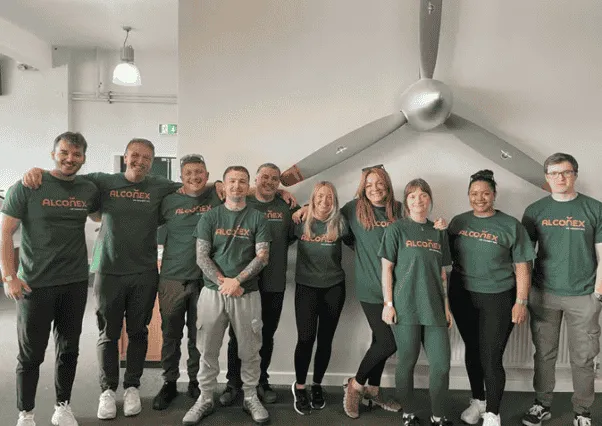
Nobody grows up dreaming of digging trenches and pulling cables in the pouring rain. It’s an honest truth that Dr. Steve Farmer, CEO of utilities specialist Alconex, openly acknowledges.
When Steve took the helm in 2024, he inherited a 65-person business with deep roots, intense employee loyalty dating back to its 2017 founding and a significant commercial hurdle: the business had plateaued and lost money that year. To make matters more demanding, private equity backing supported a bold ambition to quintuple turnover by 2029.
Faced with scaling the team toward an 180-190 people, Steve realised that executing a financial transformation meant starting at the exact opposite end of the balance sheet. Together with Amy Stephenson, founder of people consultancy Human, Alconex set out to transition the business from a gritty startup passionate culture into a structured, high-performing mid-sized enterprise, all without losing its soul.
Moving Past "Unfocused Effort" to Chapter Two
In its early years, Alconex grew on pure graft. But by 2024, the limits of relying solely on baseline worker loyalty were beginning to show. There was no internal HR support, and an organisational design framework was practically non-existent.
"If I’d done a straw poll back then, a lot of people wouldn't have known who their official line manager was", Steve recalls. "People used to judge how well they were doing simply by how busy they were. To a certain extent, we were busy fools. We had very passionate and driven people but there was no clear strategic direction. We had all the ingredients and immense love for the company, but it was the end of chapter one."
To kick off chapter two, Steve and Amy introduced essential structural clarity: explicit reporting lines, balanced scorecards and performance objectives. Crucially, they added an intentional layer of pastoral care for managers out on construction sites who previously felt isolated from central business communications.
"When private equity supports you to quintuple turnover, it feels counterintuitive to focus on a culture deck", Steve explains. "But for me, it's always strategy mapping. You sort out the people, build brilliant processes, serve the customer and profitability becomes the natural, congruent outflow."
Fuelling the Personal Growth Engine
To prevent employees from chasing the wrong career paths or hitting development ceilings, Alconex engineered the Personal Growth Engine, a three-pronged framework designed to align individual fulfilment with corporate expansion:
The Personal Growth Framework
- Morphira (Talent Analytics Platform): A neuroscience- and psychology-backed talent analytics platform that maps employees’ cognitive strengths, skills, behavioural preferences and enjoyment fit. This helps Alconex align people to roles where they are most likely to thrive, grow and perform, rather than pushing them toward generic progression routes or arbitrary job titles.
- The Gen X Programme: A comprehensive 18-to-24-month leadership development syllabus previously utilised by global brands like Toyota and IKEA, currently training an initial cohort of 10 future Alconex leaders.
- Career Ascent Programme: A completely self-selected development pathway open to any employee seeking advancement, shifting away from exclusive "high-potential" tracking.

Avoiding a “Pyrrhic” Victory
As Alconex targets growth from £17 million to a projected £100 million by 2029, Steve remains fiercely protective of the workplace atmosphere.
"It would be a Pyrrhic victory if I'm standing by a water cooler in 2029 and overhear someone say, 'It just doesn't feel like Alconex anymore'", says Steve.
To mitigate this risk, the company published a transparent Culture Book. Distributed to candidate shortlists and recruiters on their preferred supplier list (PSL), it serves as a mutual screening tool. "We want the wrong people self-selecting out", Amy notes, "and the right people running toward us."
The cultural filtering is working. Alconex boasts a staggering 1.1% attrition rate, with only two voluntary resignations in two years. Behavioural alignment is prioritised over raw performance; the company has parted ways with individuals who could technically do the job but failed to match the firm's values.
Overcoming the “Process Vacuum” Across Sites
Operating across multiple hubs - including Leeds, Bromsgrove, Fencehouses and Southampton - presents structural communication barriers. To combat geographic silos and prevent an accidental "process vacuum" where regional hires default to old habits, Alconex is actively harmonising its software platforms and workflows into unified, company-wide operating systems.
Physical equity matters, too. Office refurbishments are meticulously rolled out across all regions sequentially so no location feels secondary to the Leeds headquarters.
Internal communication has received a major technological upgrade via Alconex TV, a network of synchronised screens streaming internal updates, employee birthdays, work anniversaries and site features across every regional office. Furthermore, the company launched Connected, a quarterly print newsletter mailed directly to employees' home addresses.
"Connected is packed with photographs of our gangs out on site doing a great job. It gives us the perfect platform to highlight our charity work and milestones directly to their families."
Flipping the Script on Fair Deal
In a sector with a shallow UK talent pool, Alconex recognises it must position itself as the employer of choice. This realisation drove a complete overhaul of their employee benefits package:
- Fully Funded Health: Westfield Cash Health Plans, with the company absorbing the full tax and contribution costs.
- The Premier League: A targeted productivity incentive scheme for site gangs where the league-winning team takes home a trophy and a £4,000 bonus.
- The Big Shop Lottery: To ease cost-of-living pressures, three names are drawn at random on the third Friday of every month, receiving an extra £150 net cash in their next pay check.
- Universal Security: Four times death-in-service salary benefits provided to every single employee, regardless of rank.
Steve brushes off any traditional financial pushback regarding these perks. "My finance director will tell you what it costs, but I say it costs absolutely nothing. We get it back in spades through recruitment savings. We just post an advert on LinkedIn and top-tier talent beats a path to our door."
The "Data Geek" Roadmap to Three Stars
The ultimate proof of Alconex's cultural shift lies in its rapid ascent through the Best Companies benchmarks. After initially registering as Ones to Watch, Steve - a self-professed data geek who has run the survey eight times across various major construction firms over 15 years - was determined to improve.
"I've done this with Balfour Beatty, Mabey Hire and others, and I had never achieved higher than Ones to Watch", Steve admits. "When we hit Ones to Watch here, I was disappointed because I knew our work deserved better. But the data proved it was simply a communication gap. We were doing the work, but the site teams weren't feeling it."
Alconex built a rigorous data-driven Gantt chart and an action plan as part of their “Operation 1-Star”. This was an incredible success, skipping the 1-Star accreditation and directly securing a 2-Star accreditation instead.
The company is already planning its next iteration: “Operation Three Star”. The next targeted evolutionary step focuses on training their technical management cohort to shift away from an autocratic, directive style of leadership toward a collaborative, coaching framework.
For Steve, the metrics are more than an award; they represent a live organisational evolution. "As a CEO, it’s a privilege to run these kinds of social experiments", Steve smiles. "We lifted the cover off a business full of great people, gave them clear direction and now they are absolutely flourishing."
Written in collaboration with
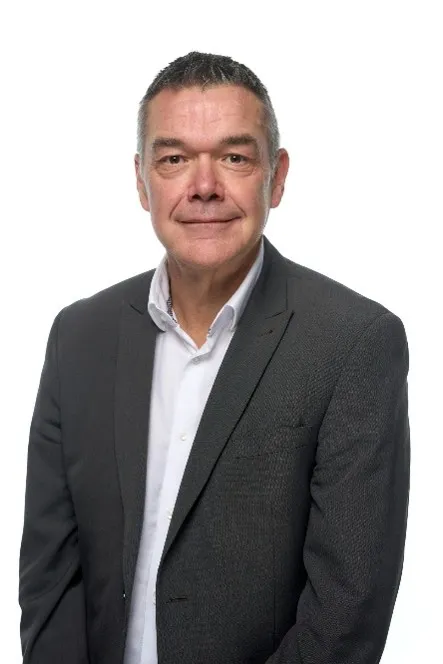
Steve Farmer, CEO, Alconex
Dr. Steve Farmer is the CEO of Alconex, where he leads the national-scale multi-utilities business with a data-driven approach to strategy, culture, and momentum. He holds a doctorate that heavily shapes his evidence-based leadership style, focusing on challenging assumptions and simplifying complex corporate structures. Steve is also a published business author, having written Building a Winning Business Strategy and Soft Skills Delivering Hard Numbers, with a third book currently underway. He balances his serious commercial focus and commitment to workplace culture with a grounded, light-hearted leadership perspective, aided outside the office by his family's unofficial support crew of three donkeys, three dogs and forty ducks.

Amy Stephenson, Founder, Human
Amy Stephenson is the founder of Human, a people consultancy that partners with CEOs and leadership teams to architect sustainable workplace cultures and structures for scaling businesses. Her work focuses on how leadership behaviour shapes organisational outcomes, aligning systems and design to prevent burnout as companies outgrow their original framework. Driven by a mission to help 10,000 leaders create one million better jobs, Amy's passion for people and organisational culture was sparked during her post-study years traveling solo around the world, including a year teaching English in Japan. She channels these sharp cross-cultural observations and instincts into her consultancy work, following an earlier foundational career in recruitment and advanced professional study.