
State of Engagement 2026 Report |
Download report
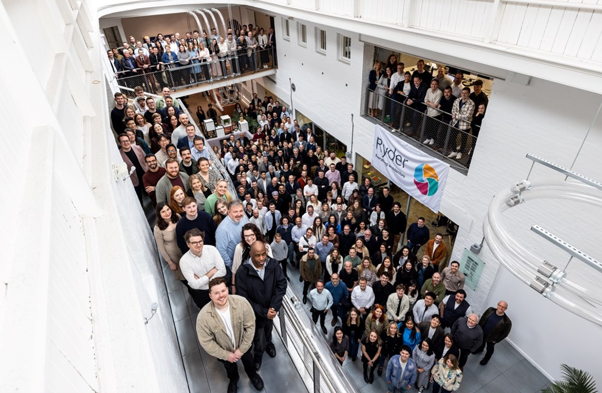
For many organisations, workplace culture is treated as an abstract concept, something to be captured in a slick brochure or discussed once a year at an executive retreat. But for Ryder Architecture, culture is something concrete, designed and iterated with the same precision as the buildings they create.
Led by Managing Director Mark Thompson, the practice has navigated the highs and lows of the last two decades, growing to over 300 people across multiple locations, by leaning heavily on two core principles: relentless communication and an unshakeable commitment to honest feedback.
Ryder’s structured approach to alignment between the organisation’s aims and its people isn't a recent post-pandemic pivot. It dates back to 1994, when Thompson and co-director Peter Buchan took over the business and drafted a six-page A4 document outlining their vision.
Today, that document has evolved into Blueprint: a beautifully presented, hardback coffee-table book and digital publication distributed to every colleague at the end of April each year. Structured around Ryder’s four pillars of excellence (People, Clients, Projects and Finance) Blueprint serves as both a reflection on the past year and a transparent road map for the next.
"It’s a reflection of the past year, how we performed against certain goals we set", explains Mark. "It’s the discipline to stick to that year after year that makes it really embedded in the culture of the business. Without this clarity, the firm would feel rudderless."
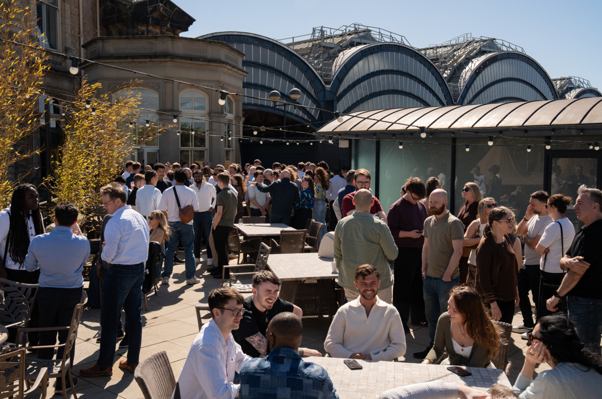
Every two years, the entire practice gathers physically to celebrate the launch of Blueprint, most recently in York, featuring a keynote on "enterprise leadership" by former Welsh rugby captain Ryan Jones OBE. In the alternate years, the celebration is held remotely via a series of coordinated talks and presentations, ensuring the connection is never lost.
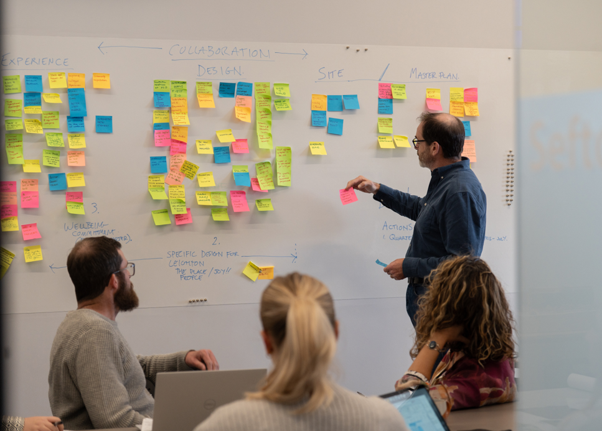
Ryder’s relationship with workplace data runs deep. The practice first registered with Best Companies back in 2006. Mark openly recalls the early frustrations of the journey.
"I remember the frustration of it taking so long to get even one star", Thompson admits. "There was a lot of discussion around whether it was worth it and what we were getting from it. But the honest feedback you get is invaluable. People see it as a safe, truly anonymous place where they can say what they like."
Rather than centralising the results at the board level, Ryder cascades the survey data directly down to team leaders - giving their people leaders the true insight to drive change.
When a dip in the practice’s overall wellbeing score was identified, the firm partnered with Business in the Community to launch Work Well; a holistic strategy and toolkit tackling financial, physical and mental wellbeing through quarterly updates.
As Ryder expanded across the UK - bridging gaps between its historic northern roots in Newcastle and offices in London, Manchester, Liverpool, Bristol and Glasgow - Thompson recognised the structural traps that fast-growing firms often fall into.
To prevent internal geographic rivalries and siloed profit-and-loss defensive mindsets, Ryder introduced a unique "Tree Structure" for its teams (naming groups after the trees Oak, Beech, Birch and Maple).
The system operates on strict rules:
"A lot of businesses go down the geographic route", says Mark. "But then you end up having a profit and loss around that location, and people become defensive and protective of their work. We maintain a 'one profit centre' model. We are all rewarded on the success of the whole practice."
If there is a category Mark takes the most pride in, it is Personal Growth.
The firm's investment in professional development is extensive. Alongside robust apprenticeship pathways, the firm runs the Ryder Bursary (originally introduced in 1994), providing £12,000 a year to support undergraduates during their master’s degrees.
For mid-to-senior professionals, the pinnacle is Ryder's internal Learning Leadership Development Programme. Initially conceived as a highly bespoke MBA tailored explicitly for design and professional services firms, it accepts just 12 people every four years.
"We keep it strict and highly selective", Mark notes. "It’s something people really need to work hard to get into, rather than something we just roll out widely. Half of our current leadership group has come through that pipeline.”
When it comes to the modern workspace dilemma, Ryder shuns rigid monitoring mechanisms in favour of clear guidelines. The practice operates on an expectation, rather than a rule, that people spend four days a week in the office.
The philosophy ties back into Mark's focus on "learning by osmosis”. Because architecture is inherently collaborative, younger professionals thrive when they can simply look across a desk for immediate mentorship.
Constructing an Enduring Culture
By anchoring individual responsibility to collective accountability, Ryder has successfully scaled its headcount without losing the collaborative, supportive spirit that defined its six-page Blueprint more than thirty years ago.
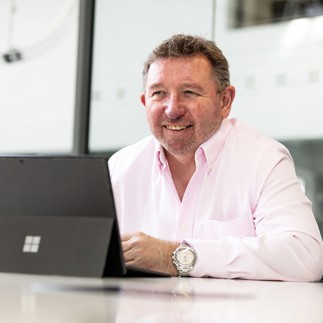
Mark Thompson, Managing Director
Mark Thompson is the Managing Director of Ryder Architecture, where he oversees the strategic development of the practice and recently led its transition to an Employee Ownership Trust. He began his career in engineering at British Shipbuilders before joining Ryder Architecture in 1988, subsequently qualifying as an architectural technician at Newcastle Polytechnic and studying project management and business at Newcastle University. An Honorary Fellow of the RIBA and a Fellow of the IET, Mark was named North East England Business Executive of the Year in 2018. He is deeply committed to regional development and philanthropy, serving as chair of the blood cancer charity Bright Red, and a board member of the North East England Mayoral Statutory Authority, alongside sitting on CBI councils.
