

How do you build world-class teams?


Key takeaways
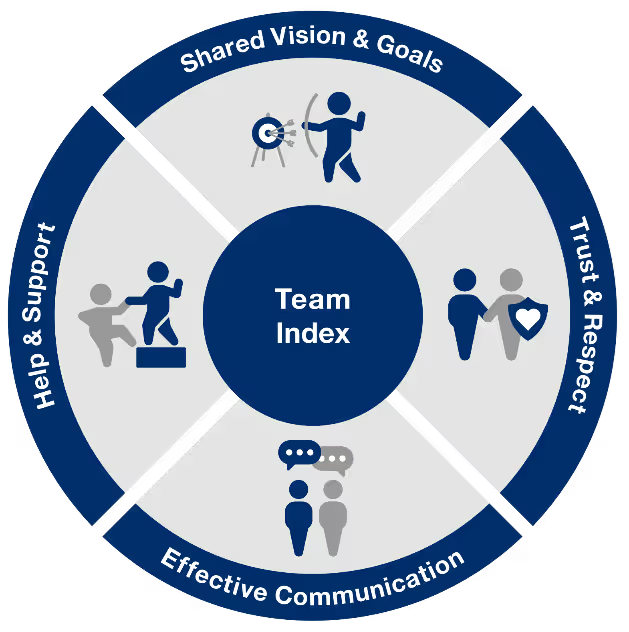
- There are four key elements in the Team Index model: Trust and Respect, Shared Purpose, Effective Communication, and Help and Support. Together, these form the basis of all effective team relationships.
- Shared Purpose: Ensure everyone understands and aligns with the team's and organisation's purpose and objectives. This boosts engagement, drives growth, and improves team effectiveness.
- Trust and Respect: Foster both predictive trust (reliability) and vulnerability-based trust (openness). These are essential for cohesive and high-performing teams.
- Effective Communication: Encourage both advocacy (sharing ideas) and inquiry (asking questions). This builds confidence, creativity, and empowers individuals through improved team communication.
- Help and Support: Provide support to boost morale and productivity. A supportive environment leads to a happier, more confident, and collaborative team. A people-first culture further increases brand recognition.
– Michael Jordan, former championship basketball player
Michael Jordan may have been talking about basketball, but the same principle applies to business: high-performing teams are built, not born. And while individual brilliance can deliver the occasional win, consistent, sustainable success comes from strong team dynamics, clear purpose, and a people-first culture based upon clear team communication and support.
World-class, high-performing teams are built on the foundation of one key truth: managers make the difference. That’s why investing in manager development is essential.
So, what are the team strategies that are fundamental to creating high-performing teams?
Based on insights from over 25 years of engagement surveys and expertise, our research shows that there are four key behaviours that managers must embody to ensure that their teams are engaged, productive, and aligned with the organisation’s values and goals.
We call these behaviours The Team Index Model.
Organisations that enable their managers to focus on these elements will nurture high-performing teams that are truly synergised to the business.
The Team Index Model: Four essentials for team excellence
Shared Vision and Goals
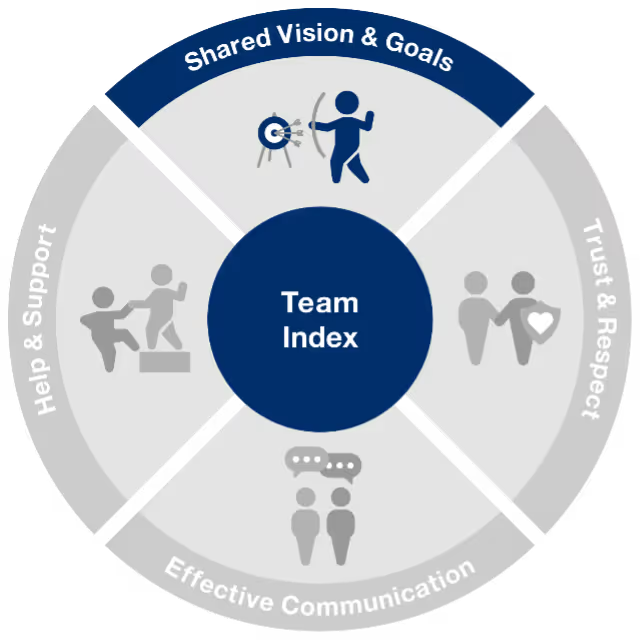
Purpose alignment is a powerful driver of employee engagement. When team members understand why they do what they do—and how their role connects to the bigger picture—they’re more motivated, collaborative, and innovative.
Great organisations start with why. Instead of leading with the “what” and “how,” they communicate a compelling vision that inspires teams to act with intent.
Clarity is key: do your managers have a clear grasp of your organisation’s purpose? If not, how can your organisation enable managers to better communicate it to their teams?
Trust and Respect
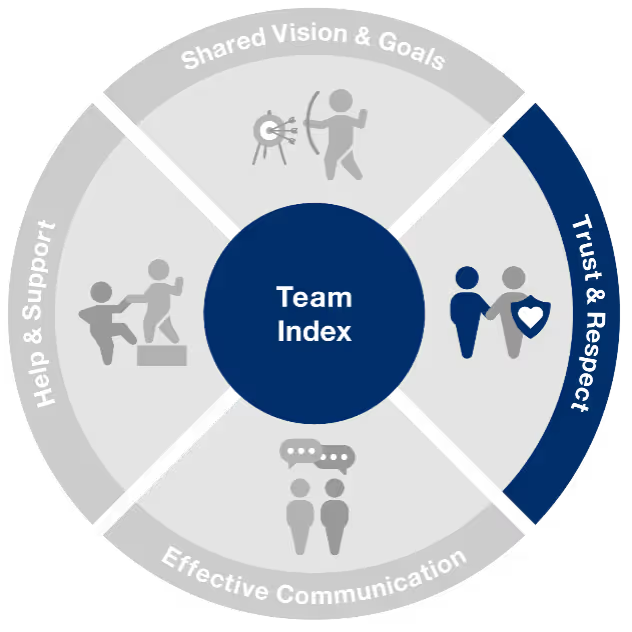
The foundation of any high-performing team is trust—both predictive (reliability) and vulnerability-based (openness). Teams that trust one another are more cohesive, resilient, and collaborative. Trust creates psychological safety, allowing team members to speak up, take risks, and support one another without fear. Managers that show trust in teams will encourage their direct reports to be more imaginative, nurturing more creative thinking, resulting in unique solutions to challenges the organisation faces.
Crucially, trust isn’t always visible in performance metrics. Many mid-level performers may be quietly enabling others to thrive by being dependable and emotionally intelligent team players. Organisations that recognise and value trust—not just focusing on tangible results—build stronger, more sustainable people-first cultures.
Effective Communication
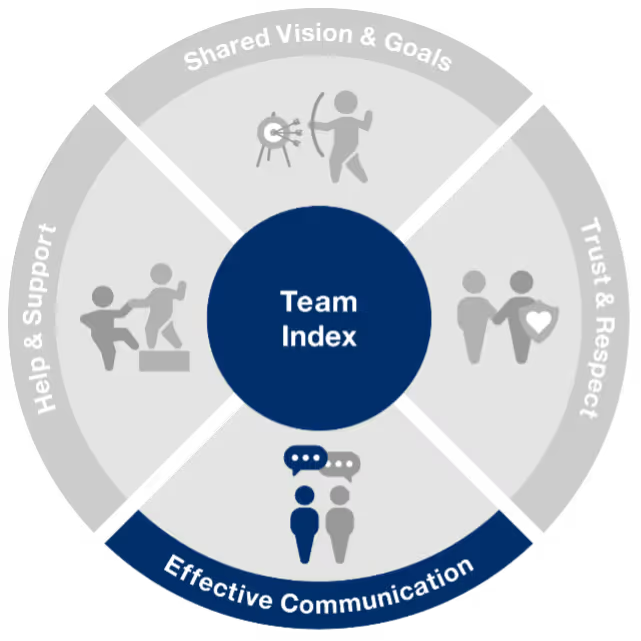
World-class teams master both advocacy (sharing ideas) and inquiry (seeking understanding). Most teams are good at advocacy. Few consistently practice inquiry.
Enabling managers and teams to ask more questions, facilitate discussion, and invite input creates a culture where diverse perspectives are heard and valued. This not only boosts creativity—it builds confidence, drives better decisions, and improves team dynamics.
Help and Support
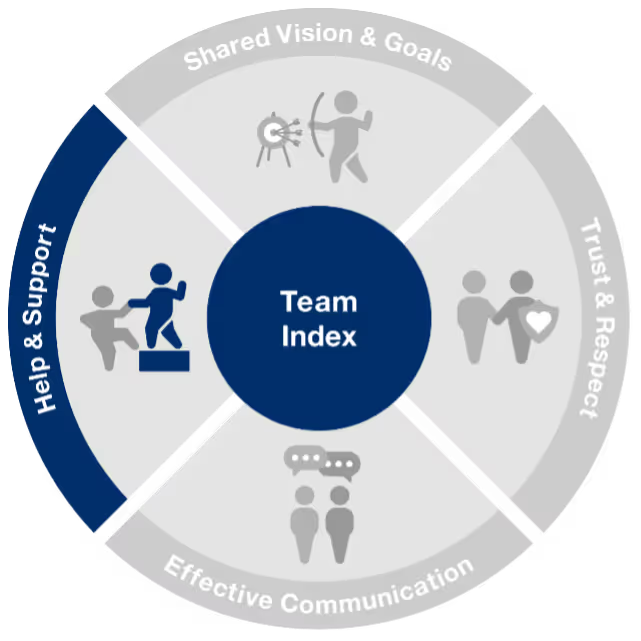
Supportive teams perform better. It’s that simple. When individuals feel supported—both professionally and personally—they’re more engaged, more productive, and more likely to support others in return.
This last part is key. Helping each other out is the cornerstone of a world-class team. Looping back to the sports analogy at the top of this article, an individual may come up with a moment of brilliance to win the odd game here and there, but a team that helps and supports each other will be victorious more often.
But support must be modelled - and it starts with managers. By showing up for their teams, they set the tone for a culture where helping each other is the norm—not the exception.
What the data tells us
In 2024, My Team emerged as the highest-scoring factor in engagement surveys (78.21%), across nearly 350,000 responses. But there’s a warning sign: this score has declined from previous years. And 15 out of 18 Team Index statements saw year-on-year decreases.
The biggest drops?
- “At least one person in my team is underperforming” (-1.43%)
- “I have complete trust for everyone in my team” (-0.89%)
These dips suggest that while employees still value their teams, organisation’s focus on team dynamics may be slipping—especially around trust and performance alignment. Now is the time to double down.
What's next?
The Team Index Model offers a powerful framework for building high-performing teams—but it’s not one-size-fits-all. Different roles, personalities, and levels of experience call for nuanced, tailored management. How can organisations ensure manager enablement to build world-class teams?
That’s where Elevate comes in.
Elevate empowers managers to lead more effectively by providing honest employee feedback, actionable insights, tailored development paths, and data-driven tools to improve team performance and employee engagement through trust, purpose, communication, and support.
Help your managers build world-class teams Discover how Elevate transforms managers into team leaders who inspire, connect, and deliver.
Explore Elevate now.
of organisations
Saw a decline in their ‘My Team’ score in the past year.
of organisations have teams that care
With most employees disagreeing with the statement “People in our team don’t care much for each other.”
Despite declining in the past year, ‘My Team’ remains the highest.