
Learning how to improve employee wellbeing is no longer just a trend or a human resources initiative, it has become a core business imperative for organisations around the world.
Organisations and their employees are facing rapid technological change, shifting workplace dynamics, evolving expectations around work-life balance and heightened stress levels. As a result, workplace health extends far beyond standard physical safety. Modern employee wellbeing encompasses mental, emotional, physical, financial and social health.
When organisations proactively invest in holistic health strategies, they cultivate an environment where individuals thrive both personally and professionally. This article explores actionable, sustainable strategies to help leaders and HR professionals foster a healthier, happier, and more productive workforce.
The Business Case for Employee Wellbeing
Before implementing specific programs, it is crucial to understand why investing in workforce health matters. Historically, employee health initiatives were viewed as added costs or fringe perks. Today, data and experience consistently demonstrate that prioritised wellbeing directly correlates with key organisational metrics.
- Enhanced Productivity: Employees who feel physically energised and mentally supported can focus better, solve problems more creatively and maintain higher standards of work output.
- Reduced Absenteeism and Presenteeism: A robust health strategy reduces both full-day absences (absenteeism) and the phenomenon where employees are physically present but mentally disengaged due to stress or illness (presenteeism).
- Improved Retention: Highly engaged talent is far less likely to leave an employer that demonstrates genuine care for their ongoing health and development, thereby lowering costly recruitment and onboarding expenses.
- Stronger Workplace Culture: Supporting workers fosters trust, psychological safety and team cohesion, making the company an attractive place for top-tier candidates.
So, how can organisations improve employee wellbeing?

Prioritise Mental Health and Psychological Safety
Mental health is a foundational pillar of modern workplace wellness. High levels of chronic stress, burnout and anxiety can quietly erode organisational effectiveness.
Foster Psychological Safety
Psychological safety exists when team members feel safe to take calculated risks, voice concerns, ask questions and admit mistakes without fear of negative consequences or humiliation. Leaders can cultivate this environment by practicing active listening, showing vulnerability and rewarding open communication.
Provide Mental Health Resources
Ensure your workforce has direct access to mental health support. This includes providing an Employee Assistance Program (EAP) that offers confidential counselling services, mindfulness applications and stress management workshops. Normalising discussions around mental health helps destigmatise seeking assistance.
Address Burnout at the Root
Burnout is rarely caused by a lack of individual resilience; it is usually an organisational issue related to excessive workloads, unclear expectations or lack of control over one's schedule. Audit team workloads regularly to ensure goals remain realistic and achievable.
Offer Flexible and Autonomous Work Environments
The modern workforce deeply values flexibility and autonomy. Dictating rigid hours or requiring physical presence when unnecessary can breed frustration and disengagement.
Embrace Flexible Schedules and Hybrid and Remote Working Options
Where operational roles allow, offer flexible start and end times, condensed workweeks or hybrid and remote options. Giving employees control over where and when they complete their work allows them to better balance personal responsibilities, such as childcare, eldercare or medical appointments, alongside professional duties.
Focus on Outcomes Over Hours
Shift manager mindsets away from monitoring "time spent at desk" toward measuring actual deliverables and quality of work. Trusting team members to manage their time autonomously boosts morale, confidence, and overall job satisfaction.
Designing Workplaces: How to Improve Employee Wellbeing Physically
Physical health significantly impacts daily energy levels, cognitive performance and emotional resilience. Organisations should shape environments that encourage healthy choices and movement.
Optimise Ergonomics and Workspace Comfort
Whether employees work in an office or remotely, proper ergonomics are vital. Offer standing desks, supportive chairs, adjustable monitor arms and guidelines for proper posture to prevent musculoskeletal injuries. For remote workers, consider providing, if you can, an equipment stipend to set up a comfortable home office.
Promote Regular Movement Throughout the Day
Sedentary habits pose significant long-term health risks. Encourage regular movement by promoting walking meetings, establishing step challenges or offering subsidised gym memberships. Simple changes, such as scheduling 25-minute or 50-minute meetings instead of full-hour slots, allow employees short buffer times to stretch, hydrate and rest their eyes.

Provide Healthy Nutrition Options
For physical workplaces, replace sugary snacks and sodas in breakrooms with fruit, nuts, herbal teas and filtered water. Nourishing food options prevent blood sugar crashes and sustain cognitive energy throughout the afternoon.
Support Financial Wellness
Financial worry is one of the leading causes of personal stress among working adults. Financial instability can seep into the workday, negatively impacting concentration, decision-making and emotional health. Understanding how to improve employee wellbeing requires addressing this critical area directly.
Provide Competitive Compensation and Transparency
At its base, financial wellbeing begins with fair, living wages that reflect market rates and inflation. Transparent compensation structures and clear pathways for advancement give employees confidence in their long-term financial future.
Deliver Financial Literacy Education
Host workshops or offer access to third-party financial advisors to guide employees through practical topics such as:
- Budgeting and debt management
- Retirement planning and pension options
- Emergency fund building
- Tax optimisation strategies
Expand Financial Benefits
Consider offering practical perks that relieve immediate financial pressures, such as student loan repayment assistance, emergency relief funds, matching retirement contributions or discounts on essential goods and services.
Build a Culture of Recognition, Purpose and Social Connection
Human beings are inherently social creatures. Feeling isolated or unappreciated in the workplace directly undermines individual happiness and team morale.
Embed Regular Recognition
A simple "thank you" goes a long way. Establish peer-to-peer recognition programmes and ensure leaders regularly acknowledge individual and team achievements. Recognition should be timely, specific and tied to company values.
Connect Daily Tasks to Organisational Purpose
Employees are far more engaged when they understand how their daily responsibilities contribute to a broader mission. Clearly communicate company goals and illustrate the tangible impact of each role within the broader organisation.
Encourage Meaningful Social Connections
Facilitate opportunities for genuine social interaction that do not feel forced. This can include team lunches, voluntary interest clubs, mentorship programs or community service days. Strong workplace friendships serve as a powerful buffer against stress.
Implementin a Sustainable Wellbeing Strategy
Knowing how to improve employee wellbeing conceptually is step one; execution requires a thoughtful, multi-phase roadmap to ensure long-term adoption and success.
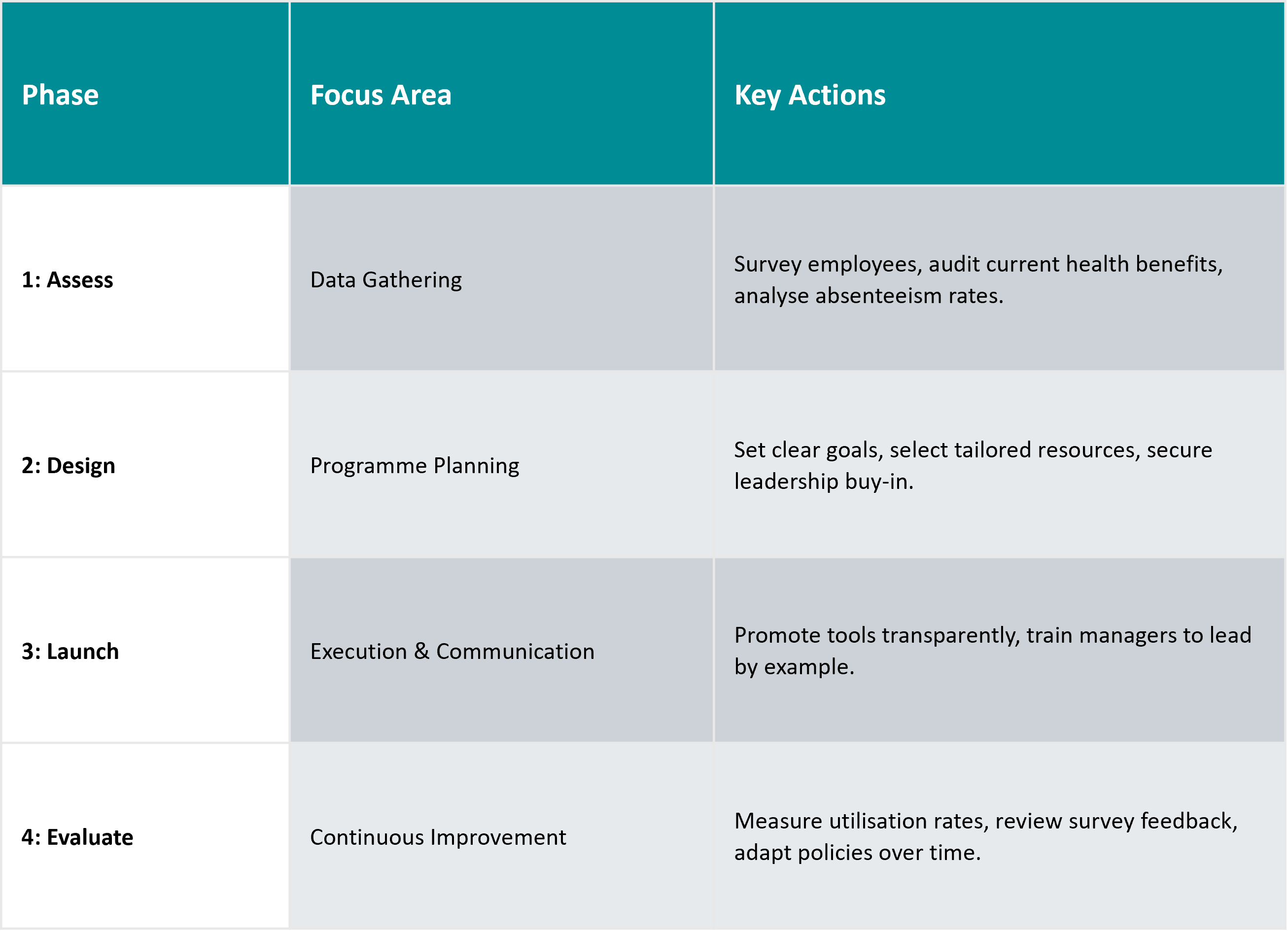
Lead by Example
No initiative will succeed if leadership fails to model healthy behaviours. When executives publicly take time off, log off at reasonable hours and utilise wellness benefits, it signals to the rest of the organisation that prioritising personal health is accepted and encouraged.
Building a Culture of Sustainable Success
Improving workplace wellness is not a one-time project or a single checklist item; it is an ongoing organisational commitment. By taking a holistic approach that embraces mental health support, flexible working conditions, physical ergonomics, financial education and a strong culture of appreciation, companies build resilient, highly engaged teams. Ultimately, when leaders prioritise the whole person rather than just their output, both the workforce and the business achieve sustainable success.