Why People Leadership must be a priority as organisations adapt to AI, the uncertainty of constant change and rising employee expectations
The conversation around the future of work often centres on technology. AI, automation and machine learning are reshaping organisations at an unprecedented pace, changing how work gets done and creating new opportunities for efficiency. But technology alone will not determine which organisations thrive.
As Human Founding Director, Amy Stephenson, explains, “business as usual” no longer exists. Organisations are operating in an environment of continual change, economic uncertainty, new ways of working, technological advancement and evolving employee expectations. In this landscape, how organisations approach leading through change will be vital in securing long-term success.
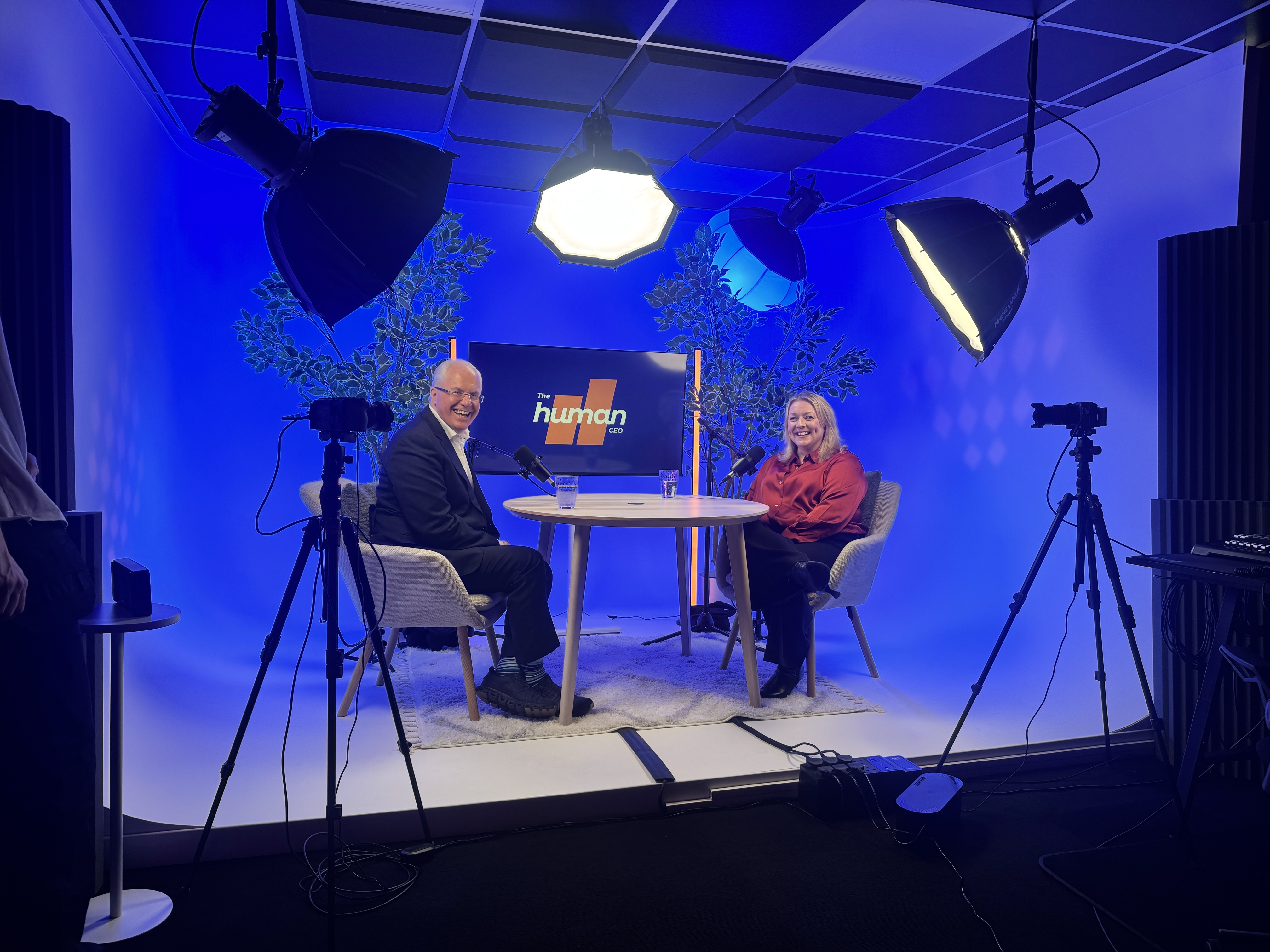
In the latest episode of The Human CEO, host Amy Stephenson invites Best Companies CEO Jonathan Austin to share insights from more than 25 years of helping organisations “make the world a better workplace” and to answer a critical question: How can business leaders communicate clear direction and maintain trust when the future of work remains uncertain?
Organisational Health Starts with Organisational Clarity
When technology and market conditions change too fast to predict, employees naturally worry about what it means for their roles. Without clear communication, people start guessing and worrying, which quickly erodes morale, trust and productivity.
Leaders often feel immense pressure to provide certainty. However, in today’s volatile economic climate, certainty is impossible to offer. What leaders can provide is Organisational Clarity.
To guide teams through continuous change, Jonathan identifies Organisational Clarity as the foundation of Organisational Health. Organisational Clarity rests upon four core foundations.
- Primary Purpose: Why the organisation exists beyond immediate profit.
- Core Principles: The everyday behaviours that guide conduct and decision-making.
- Outrageous Ambition: The long-term vision of what the organisation aims to achieve.
- Ingenious Plan: How the organisation plans to reach its destination.
When people understand where the organisation is going, why it matters and how they contribute, they are far more likely to trust leadership and contribute positively to the organisation's success.
The most effective organisations create confidence by consistently communicating purpose, principles, ambition and direction, helping people understand the bigger picture even when circumstances continue to evolve.
However, this requires a leadership skillset that is often underappreciated when it comes to hiring or promoting managers.
In Amy’s work at Human, clarity rarely breaks down in the boardroom. It breaks down on an average Tuesday afternoon, when someone asks their manager, “So, what does this mean for me?” If the manager can’t connect purpose, principles, ambition and plan to that person’s actual week, the message stops there.
Human sees it play out in three everyday moments: what managers prioritise, what they praise and what they let slide. People feel and believe what their manager does over what leadership says. It’s one reason two teams in the same business can tell very different stories in their survey results.
“What we must do as leaders is create clarity, but what we can’t do is create certainty.” - Jonathan Austin
The Future Belongs to Organisations That Build Capability to Lead Through Change
For decades, organisations have promoted individuals because they were strong performers in their role.
The challenge is that being good at a profession does not automatically make someone a great People Leader. This has contributed to the rise of the “accidental manager” and a growing gap between technical expertise and People Leadership capability.
A key takeaway from the discussion is the distinction between three leadership responsibilities:
- Running the business
- Improving the business
- Building capability
Most leaders naturally focus on the first two and the third is often overlooked, yet building capability is what creates future success.
Organisations that invest in developing leaders, strengthening coaching capability and creating clarity throughout the business will be better equipped to navigate whatever comes next.
“People don’t want to be managed. They want to be coached.” - Jonathan Austin
Today’s employees don't want to be supervised; they want to be coached, developed and engaged in meaningful dialogue. The role of a People Leader is shifting from controlling activity to unlocking potential.
People Leaders are now expected to:
- Create clarity
- Build team cohesion and belonging
- Coach individuals to succeed
- Support wellbeing
- Navigate change
- Drive performance
This requires a different skillset altogether.
As Jonathan explains in the episode, effective People Leaders are likely to become one of the scarcest organisational capabilities over the next decade.
Moving Beyond "You Said, We Did"
One of the key People Leader capabilities is how managers bring their teams into the decision-making process.
“People don’t want to be changed. They want to be enabled to make a change.” - Amy Stephenson
One of the strongest ideas from the conversation is a challenge to the traditional employee listening model. For years, organisations have operated on the principle of "You said, we did."
At Best Companies, we believe there is a more powerful approach:
"You said, we listened, and together we improved."
This subtle shift changes listening from a transactional exercise into a shared responsibility. Instead of leaders fixing problems for employees, people become active participants in improvement, creating stronger ownership, better conversations and more sustainable change.
This is particularly important in a world where employees feel uncertainty due to the role of evolving technology in the workplace.
The Role of AI in a Human-Centred Future
Where does AI fit into a human-centred workplace? Rather than viewing technology as a replacement, forward-thinking organisations see it as an enabler.
AI and automation can eliminate administrative burdens, simplify processes, and analyse complex data at scale.
What technology cannot replace are the human conversations that build trust, engagement and performance.
“Technology can be great at preparing us for better conversations, but it can’t have those conversations for us.” - Jonathan Austin
The goal is to use technology to create more capacity for leadership, coaching and collaboration - not less.
The organisations that win will be those that use AI to amplify the human element rather than diminish it. In other words, technology should create more capacity for coaching, collaboration and leadership, not less.
Turning Insight into Better Conversations with Elevate
At Best Companies, this thinking is being brought to life through Elevate. The engagement platform uses technology and AI to help People Leaders understand from their survey results what is happening within their teams and prepare for more meaningful conversations.
Rather than replacing the human element of leadership, Elevate removes some of the administrative burden around interpreting data and turns employee feedback into focused, practical insight. This gives People Leaders more time and confidence to create clarity, strengthen belonging and coach their people.
Data alone does not change workplace culture. Elevate helps turn insight into focused action, while keeping People Leaders at the heart of change.
Why Recognition Matters
As People Leadership becomes more important, organisations need better ways to recognise and develop it.
That is why Best Companies are introducing People Leader Accreditations, one of the most exciting developments discussed in the podcast.
Building on our established accreditation approach, the new framework aims to recognise excellence in People Leadership at both individual and organisational levels.
The goal is not simply recognition, it's to create a clear, progressive standard that helps leaders understand what great People Leadership looks like and provides a pathway for continuous development.
Final Thoughts
The future of work will undoubtedly be shaped by technology, but technology alone will not create engagement, trust, belonging or Organisational Health.
Those outcomes will continue to be driven by people and, more specifically, by great People Leaders.
The organisations that thrive in the coming decade will be the ones that invest as heavily in People Leadership capability as they do in technological capability.
“Effective People Leaders are going to be the scarce commodity in the next 10 years. There’s no question.” - Jonathan Austin
Because while AI may transform how work gets done, People Leadership will determine whether organisations truly succeed.
“The organisations that are going to win in the future will be the ones that amplify the human element.” - Amy Stephenson
Watch Now
In the full episode below, The Human CEO host Amy Stephenson, Founder of Human, leads a candid, practical conversation with Jonathan Austin, CEO & Founder of Best Companies about Organisational Clarity, the shift from management to coaching and the role of People Leadership in helping organisations thrive through AI, change and rising employee expectations.
The Human CEO Podcast
Interviews with forward-thinking leaders about their challenges and solutions. Listen to more podcasts here.