
State of Engagement 2026 Report |
Download report




Acclaim Housing Group state that due to the dispersed nature of their workforce, often social events are combined with work events. Last year during the Olympics, a number of sport themed events were held, one example being a Family Fun Day in Harborough and Lutterworth. Members of the team took part in traditional sports day activities such as family tug of war, football and sack races. Colleagues really enjoyed spending time together and as this event was combined with a customer event, they valued the opportunity to meet and talk with customers. The organisation's customer services team, who often are at the end of the phone but don't meet customers face to face, really found the experience to be valuable.
Acclaim Housing Group state that due to the dispersed nature of their workforce, often social events are combined with work events. Last year during the Olympics, a number of sport themed events were held, one example being a Family Fun Day in Harborough and Lutterworth. Members of the team took part in traditional sports day activities such as family tug of war, football and sack races. Colleagues really enjoyed spending time together and as this event was combined with a customer event, they valued the opportunity to meet and talk with customers. The organisation's customer services team, who often are at the end of the phone but don't meet customers face to face, really found the experience to be valuable.
Acclaim Housing Group state that due to the dispersed nature of their workforce, often social events are combined with work events. Last year during the Olympics, a number of sport themed events were held, one example being a Family Fun Day in Harborough and Lutterworth. Members of the team took part in traditional sports day activities such as family tug of war, football and sack races. Colleagues really enjoyed spending time together and as this event was combined with a customer event, they valued the opportunity to meet and talk with customers. The organisation's customer services team, who often are at the end of the phone but don't meet customers face to face, really found the experience to be valuable.


Absoft continue to commit to graduate recruitment and development. They have taken on 10 graduates over the course of this year and as a management team devoted considerable time and energy into a development programme to support this.
Absoft continue to commit to graduate recruitment and development. They have taken on 10 graduates over the course of this year and as a management team devoted considerable time and energy into a development programme to support this.
Absoft continue to commit to graduate recruitment and development. They have taken on 10 graduates over the course of this year and as a management team devoted considerable time and energy into a development programme to support this.


Staff have quarterly goals and are rewarded based on their achievement. They consistently receive feedback on their progress and status against goal. Agents are recognised for being "star performers" based on their output and quality. They receive early access to the rota, Amazon gift certificates and publicity on the Forum when they receive "star status."
Everyone is encouraged to take on as much responsibility as they desire and to be accountable for activities within their control. Staff are given flexibility and autonomy and although guided toward reaching agreed goals, are encouraged to find their own way, asking for assistance when needed. Recognise and reward a job well done. Monthly scorecard to provide metric to Agents and allows them to understand their performance against set and attainable goals
Everyone is encouraged to take on as much responsibility as they desire and to be accountable for activities within their control. Staff are given flexibility and autonomy and although guided toward reaching agreed goals, are encouraged to find their own way, asking for assistance when needed. Recognise and reward a job well done. Monthly scorecard to provide metric to Agents and allows them to understand their performance against set and attainable goals
3 Monkeys often have fun and memorable social events. Every Friday afternoon, they finish work at around 4.30pm and meet in the kitchen area for drinks and nibbles. It's called TMIF - Thank Monkey It's Friday! It's usually themed and it's a chance to catch-up on what's been happening around the business over the past week. 3 Monkeys welcome all new starters, discuss new business wins and talk through any briefs they are working on to allow anyone to get involved if they so wish. TMIF usually ends up with a group of people moving on to the local downstairs! The Christmas party in December 2012 was an amazing day out. Everyone exchanged their Secret Santa presents, then headed out to Hyde Park to Winter Wonderland. Around lunchtime when everyone all started to get hungry, they were wined and dined at a beautiful restaurant in Covent Garden, had entertainment and then went on to more bars and ended up in a Karaoke bar in Soho!
Angie Moxham, founder of 3 Monkeys, set out to create a culture where people can be themselves. Creativity was free to be expressed and everyone was treated as an individual, not just an employee. Nine years on, those sentiments still guide everything Angie does and this permeates the culture from top to bottom. Angie is accessible to all staff and continues to encourage, inspire and guide the team every day to do the best work, with the best brands and with the best people. Her humanity and humour are as valued as her big brain and her even bigger contacts book.
There is an annual allowance of £200 to spend as the employee chooses on an activity that they feel will aid their personal development in some way. Ths could be learning a language, help with quitting smoking, learning to drive, music lessons, an evening class or something of a similar nature. It needs to be a genuine development or learning of a skill not just an activity.


Sally Hutfield, Director of Operations, was invited to do a 'back to the floor' shift in one of their Direct Access Hostels. Although Sally has 'worked her way up' through the ranks, it's been some time since she's done a night shift as a support worker. When she was invited to 'give it a go' however, she jumped at the chance, booked herself in and rolled up her sleeves. In the end it proved to be a challenging night but a valuable one. Working with vulnerable young people at night in a homeless hostel presents any number of stories and scenarios but Sally rose to the occasion and used the chance to link in with staff there to hear what their issues were, ideas they had and to talk about how things were going or what the wider organisation was doing. Sally keeps a blog on the staff intranet and used the opportunity to write about what she'd been up to. It was brilliantly received and people loved the fact that people 'at the top' were prepared to roll up their sleeves and 'give it a go'. It showed that the senior managers were far from out of touch, knew what challenges were being faced by support staff and still had the skills and understanding to do the shop floor work. It had quite a significant impact on staff as they were able to read about and comment on Sally's experiences.
This year, they have invested hugely in introducing e-learning across the organisation. 15 packages have been launched since May 2011 and since then, 898 modules have been passed. Feedback has been complimentary and positive and has allowed for a more flexible approach to learning allowing a dispersed and busy workforce to access specialist training at a time and place that suits them. This has had the advantage of reducing their costs whilst ensuring staff are engaged and motivated as well as being 'up to date' on training. The content of these packages are very interactive, fun and informative. An example of the difference this makes is that one service even has a learning competition which sees staff competing for the best scores and most modules successfully completed. This has really seen a transformation where staff see learning as a fun and essential part of their role.
Manager's main way of monitoring a job well done is through the clients being happy and having good support plans and risk assessments in place. Managers will then recognise this by praising staff, giving recognition at team meetings, through the Talent Reviews and by nominating staff for staff excellence awards. Managers take people's needs and desires into consideration when setting up rotas. For example, if possible they don't roster people on duty on nights they may have regular social activities or ask team members to swap shifts in order to be as accommodating as possible. Managers ensure that staff abide by the Code of Conduct and lay down what is expected in specific services at team meetings and through supervision. They ensure staff understand how they impact on the bigger picture at the Talent Review, where their objectives link to the organisational business plan and their Key Performance Indicators link to the organisational ones.


The provision of a Quiet Room has helped the wellbeing of employees. This is now provided in the Headquarters and the Greenwood Road Centre which contains 90% of the employees. This environment provides a tranquil space for staff to use anytime during their work time to reflect or have some time away from any stressful situations. The Trust has also provided excellent rest facilities for staff which provides free drinks and a place away from desks where they can eat in pleasant surroundings. The Trust has also introduced a no eating lunch at desk policy. This is to encourage staff to take a break away from their work to refuel and re-energise ready for work in the afternoon. The Trust also provides an employee assistance programme and talks on health subjects throughout the year.
The Trust has launched the Willow Futures Academy which provides training and work opportunities for local school leavers and unemployed people. This was set up in response to the withdrawal of the Future Job Funds programme and an organisational need for succession planning especially within the Property Services Department. The academy provides trainee ships, apprenticeships and work opportunities. The Trust with its partners Parkway Green Housing Trust and Job Centre plus provides opportunities for unemployed local people to increase their skills and experience, offer entry to a talent pool whereby they can apply for the work opportunities and placements within the organisation. The Trust has funded this by savings elsewhere in the organisation.
The staff Winter Celebration Event is held each year in December which combines the Trust's staff awards and a Christmas party. 250 employees attend the event which is a mixture of information about the Trust, a celebration of the year and the awarding of staff awards. Staff take part in organising the event and some staff take part in the event such as singing and games. All staff who attend receive free transport to and from the event, vouchers for drinks, a meal and a day off.

A key message from Jack, the Managing Director shortly follows the fortnightly Senior Management Team meetings to share with employee discussions and decisions made. This promotes transparency and the cascade of important information throughout the Council. He demonstrates through his actions how he wishes to be fairly treated alongside all employees; for example, when the Council tightened up entitlements to payments of car allowances for budget pressures, he relinquished his entitlement to an essential user car allowance and also wrote to the Leader of the Council indicating that because of the economic climate he will not accept any increase in salary for the next 2 years and that, even then, any increase would be subject to the Council achieving its programmed savings for the next 2 financial years.
A key message from Jack, the Managing Director shortly follows the fortnightly Senior Management Team meetings to share with employee discussions and decisions made. This promotes transparency and the cascade of important information throughout the Council. He demonstrates through his actions how he wishes to be fairly treated alongside all employees; for example, when the Council tightened up entitlements to payments of car allowances for budget pressures, he relinquished his entitlement to an essential user car allowance and also wrote to the Leader of the Council indicating that because of the economic climate he will not accept any increase in salary for the next 2 years and that, even then, any increase would be subject to the Council achieving its programmed savings for the next 2 financial years.
A key message from Jack, the Managing Director shortly follows the fortnightly Senior Management Team meetings to share with employee discussions and decisions made. This promotes transparency and the cascade of important information throughout the Council. He demonstrates through his actions how he wishes to be fairly treated alongside all employees; for example, when the Council tightened up entitlements to payments of car allowances for budget pressures, he relinquished his entitlement to an essential user car allowance and also wrote to the Leader of the Council indicating that because of the economic climate he will not accept any increase in salary for the next 2 years and that, even then, any increase would be subject to the Council achieving its programmed savings for the next 2 financial years.

At WWF-UK they strive to create an open culture and people are actively encouraged to put forward ideas, suggestions, proposals or problems. As well as having an open door policy where people feel comfortable talking through their views with colleagues, managers and senior managers, people get the opportunity to attend all employee talks at least six times a year where they can ask questions of the senior managers, directors and others in the organisation. They run drop-in sessions with project teams and directors so people can go along and chat through their thoughts and ideas on particular areas of work and/or topical issues. They recently ran a ‘Question Time' event where members of the Management Team answered questions as a panel. They also seek feedback through facilitated workshops and informal networks on key events and issues.
At WWF-UK they strive to create an open culture and people are actively encouraged to put forward ideas, suggestions, proposals or problems. As well as having an open door policy where people feel comfortable talking through their views with colleagues, managers and senior managers, people get the opportunity to attend all employee talks at least six times a year where they can ask questions of the senior managers, directors and others in the organisation. They run drop-in sessions with project teams and directors so people can go along and chat through their thoughts and ideas on particular areas of work and/or topical issues. They recently ran a ‘Question Time' event where members of the Management Team answered questions as a panel. They also seek feedback through facilitated workshops and informal networks on key events and issues.
To give back to the wider world, aside from the work that they do as an organisation, they have a wood chip burning boiler installed in their Scottish office which burns FSC wood chip pellets sourced locally to provide hot water and heat. They also have compost caddies at all tea points which are emptied into the wormery to reduce waste sent to land fill.
In addition, RCHL internal trainers make arrangements to customise workshops for individual staff teams and groups to best reflect their needs. Staff may also identify specific external courses that meet a particular need and arrangements are made for individuals to attend for example, National Assistive Technology/Telecare training, Developing Outcome monitoring. They are currently piloting a number of e-learning programmes focusing on core mandatory training, to ensure staff are regularly updated, for example Fire safety, Food Hygiene, Manual Handling Staff that wish to undertake an NVQ qualification in Care must have completed all the relevant induction and developmental training before they will be considered to undertake an NVQ with RCHL. The delivery of NVQs to staff is subject to funds received from the external providers. However, funding the Leadership & Management in Care (LMC) (formerly known as the Registered Managers Award) and NVQ4 in Care will be a priority for the organisation. RCHL also supports and funds the Learning Disability Qualification accredited via the Open College Network, the Leadership in Management and NVQ4 in Care qualifications. For staff who already hold an NVQ Level 2 in Care and wish to progress onto the Level 3. This will be subject to the scheme manager's approval in line with the service development plan. All successful applicants will be given support and guidance for attainment of their care qualification from their approved LSC training provider. Senior Management Team continue to source funding opportunities, with the support of external providers and are committed to staff gaining an appropriate qualification that will meet the organisation's core values and CQC requirements. RCHL are also a recognised training Centre with the Open College Network and have reached the highest standards enabling reassessment to be every two years.
In addition, RCHL internal trainers make arrangements to customise workshops for individual staff teams and groups to best reflect their needs. Staff may also identify specific external courses that meet a particular need and arrangements are made for individuals to attend for example, National Assistive Technology/Telecare training, Developing Outcome monitoring. They are currently piloting a number of e-learning programmes focusing on core mandatory training, to ensure staff are regularly updated, for example Fire safety, Food Hygiene, Manual Handling Staff that wish to undertake an NVQ qualification in Care must have completed all the relevant induction and developmental training before they will be considered to undertake an NVQ with RCHL. The delivery of NVQs to staff is subject to funds received from the external providers. However, funding the Leadership & Management in Care (LMC) (formerly known as the Registered Managers Award) and NVQ4 in Care will be a priority for the organisation. RCHL also supports and funds the Learning Disability Qualification accredited via the Open College Network, the Leadership in Management and NVQ4 in Care qualifications. For staff who already hold an NVQ Level 2 in Care and wish to progress onto the Level 3. This will be subject to the scheme manager's approval in line with the service development plan. All successful applicants will be given support and guidance for attainment of their care qualification from their approved LSC training provider. Senior Management Team continue to source funding opportunities, with the support of external providers and are committed to staff gaining an appropriate qualification that will meet the organisation's core values and CQC requirements. RCHL are also a recognised training Centre with the Open College Network and have reached the highest standards enabling reassessment to be every two years.
In addition, RCHL internal trainers make arrangements to customise workshops for individual staff teams and groups to best reflect their needs. Staff may also identify specific external courses that meet a particular need and arrangements are made for individuals to attend for example, National Assistive Technology/Telecare training, Developing Outcome monitoring. They are currently piloting a number of e-learning programmes focusing on core mandatory training, to ensure staff are regularly updated, for example Fire safety, Food Hygiene, Manual Handling Staff that wish to undertake an NVQ qualification in Care must have completed all the relevant induction and developmental training before they will be considered to undertake an NVQ with RCHL. The delivery of NVQs to staff is subject to funds received from the external providers. However, funding the Leadership & Management in Care (LMC) (formerly known as the Registered Managers Award) and NVQ4 in Care will be a priority for the organisation. RCHL also supports and funds the Learning Disability Qualification accredited via the Open College Network, the Leadership in Management and NVQ4 in Care qualifications. For staff who already hold an NVQ Level 2 in Care and wish to progress onto the Level 3. This will be subject to the scheme manager's approval in line with the service development plan. All successful applicants will be given support and guidance for attainment of their care qualification from their approved LSC training provider. Senior Management Team continue to source funding opportunities, with the support of external providers and are committed to staff gaining an appropriate qualification that will meet the organisation's core values and CQC requirements. RCHL are also a recognised training Centre with the Open College Network and have reached the highest standards enabling reassessment to be every two years.
You’ve explored the Factors - now discover how your organisation can gain deeper insight into what truly drives engagement and workplace culture.
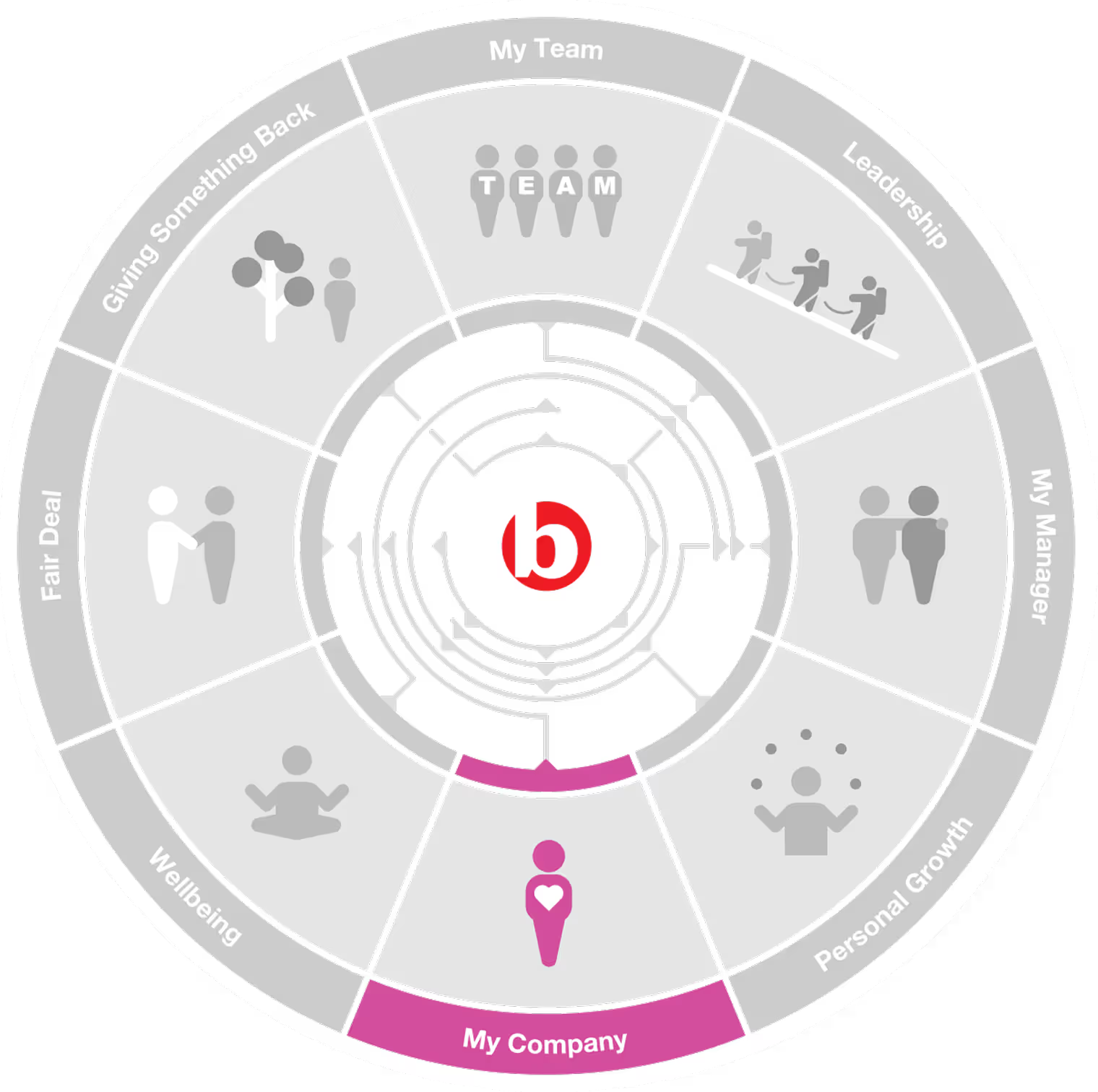
Our approach measures organisational health across eight core areas: My Team, Leadership, My Manager, Personal Growth, My Company, Wellbeing, Fair Deal, and Giving Something Back. Together, they give you a complete view of how your people think, feel, and experience work.
Complete the form and take the first step toward a stronger, more engaged organisation.
