
State of Engagement 2026 Report |
Download report


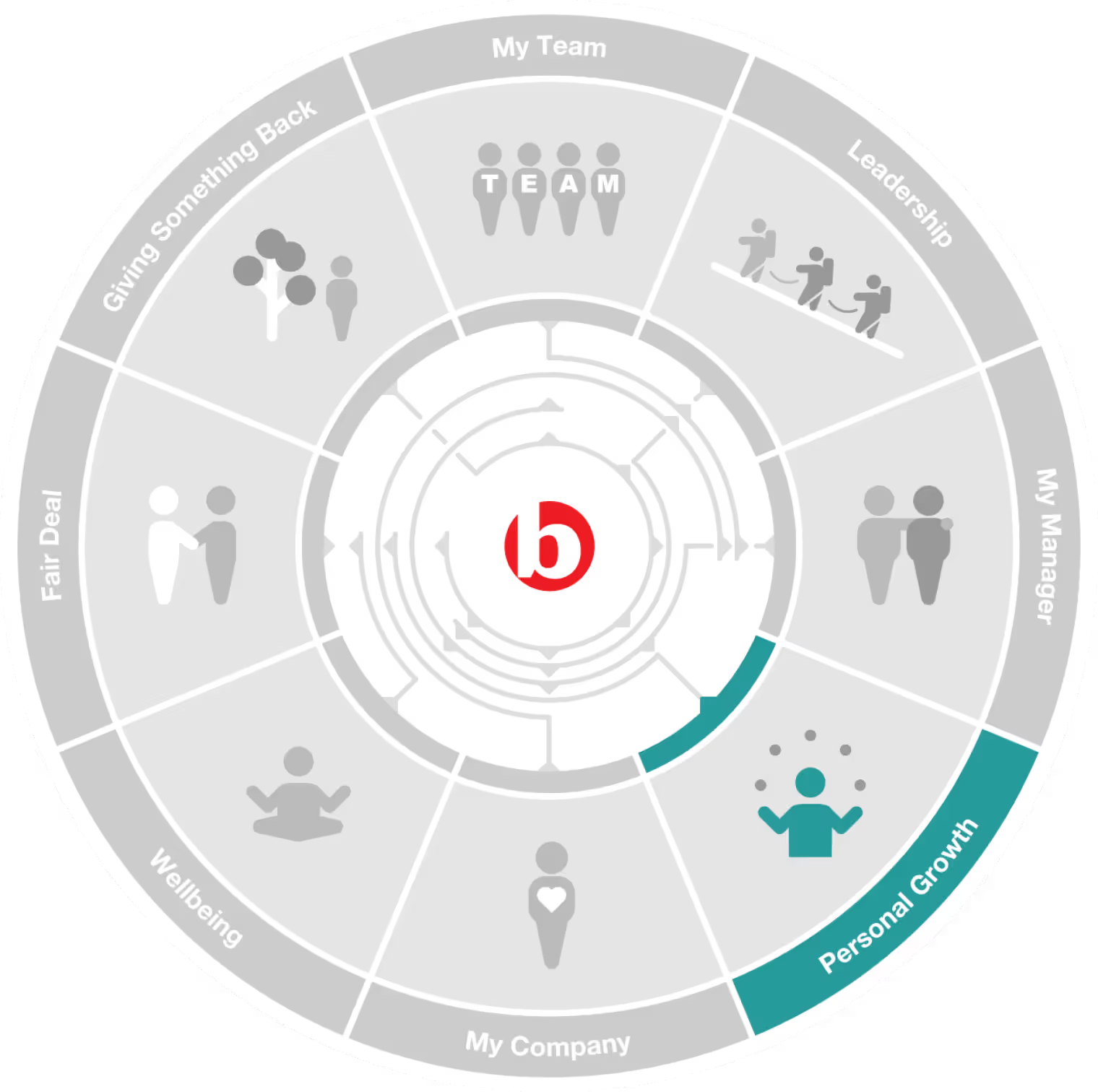

All staff are contractually obliged to participate in the annual appraisal process and are required as part of peformance review to undertake a minimum of 30 hours of CPD each year. This continues to develop the individual and maintain their subject or relevant area currency. The college appraisal scheme is designed to encourage the member of staff to reflect on their personal contribution each year, to set measurable objectives linked to the development of their area and future business objectives and to identify their training needs which enable the achievement of the objectives. This ensures currency for staff, improves the individual's market worth whilst meeting organisational objectives. Subject and Operational Managers identify the development needs for their areas based on their objectives for the operating cycle. As part of induction, individual training needs are identified for new members of staff. Core competencies are set by the college and new staff are assessed against these to identify early needs.
All staff are contractually obliged to participate in the annual appraisal process and are required as part of peformance review to undertake a minimum of 30 hours of CPD each year. This continues to develop the individual and maintain their subject or relevant area currency. The college appraisal scheme is designed to encourage the member of staff to reflect on their personal contribution each year, to set measurable objectives linked to the development of their area and future business objectives and to identify their training needs which enable the achievement of the objectives. This ensures currency for staff, improves the individual's market worth whilst meeting organisational objectives. Subject and Operational Managers identify the development needs for their areas based on their objectives for the operating cycle. As part of induction, individual training needs are identified for new members of staff. Core competencies are set by the college and new staff are assessed against these to identify early needs.
All staff are contractually obliged to participate in the annual appraisal process and are required as part of peformance review to undertake a minimum of 30 hours of CPD each year. This continues to develop the individual and maintain their subject or relevant area currency. The college appraisal scheme is designed to encourage the member of staff to reflect on their personal contribution each year, to set measurable objectives linked to the development of their area and future business objectives and to identify their training needs which enable the achievement of the objectives. This ensures currency for staff, improves the individual's market worth whilst meeting organisational objectives. Subject and Operational Managers identify the development needs for their areas based on their objectives for the operating cycle. As part of induction, individual training needs are identified for new members of staff. Core competencies are set by the college and new staff are assessed against these to identify early needs.


The company have undertaken a number of opportunities to provide face to face contact and the opportunity for colleagues to ask questions and get answers as well as providing general feedback and input. One example of this is the lunch bag sessions run by the Chief Executive to involve all colleagues in the future direction of the Group. A number of departments have also run drop in sessions, such as ICT and Learning and Development to encourage individuals to resolve queries and get to know internal colleagues, other teams such as Finance are planning to follow suit. The company find that by offering flexible opportunities to come and ask questions in a local setting will encourage more colleagues to get involved with Group activities. In addition for those colleagues who may not want to contribute in a face to face setting they carry out a number of ad hoc surveys internally throughout the year on a variety of topics.
The company's managers are well respected within their individual team which is testimony to their fair but supportive outlook with colleagues. Managers consider succession within their teams and encourage individuals to make the most of development opportunities and support provided to get the best from the individuals and to keep them motivated. Through the appraisals and also the applications for the Leadership programme managers will indicate the next likely career move for the individual and will work things into the appraisal to support these ambitions.
The company provide a wide range of learning opportunities to suit different people's needs from e-learning to work shadowing and from external seminars and conferences to a comprehensive internal training programme. In addition to this they have a range of Leadership programmes that aim to take someone through basic management skills through to Senior Management development through the development of key leadership competencies. They have recently started running career coaching sessions and Learning and Development drop in sessions to provide more guidance and support to people on which of the available opportunities are the most appropriate for them.

Kaizen works towards high expectations of both adults and children. To ensure the team is driving towards success they carefully recognise and reward individual's efforts. An example of where this is most effective is their extending schools provision - after school clubs. Adults who take on the responsibility of running an after school club are expected to organise, plan, manage the resources, including a small budget and run the club out of their normal working hours. Adults who take up this opportunity have professional support with planning and organisation if needed. This additional responsibility is rewarded by one day's paid leave which can be taken at any point throughout the school year. By introducing this reward Kaizen have found that it encourages more adults to step up and lead an after school provision which in turn means that they can offer a wide variety of out of hours learning opportunities to the children.
The best example of how the organisation supports employee development is through Kaizen's ‘Professional Learning Framework'. This document was created collaboratively to establish ways of working, for all staff, at all levels, in order to take ownership of and direct their own learning through the support and coaching of their line manager. A key part of Kaizen's support comes from utilising staff skills and strengths to support those who need help in particular areas. This often takes the form of observing other staff members at work, work shadowing or team teaching, with reflection taking a vital role between the two members. They carefully plan the outcomes of their partnership and evaluate the impact of their work together to shape future learning. Kaizen develop coaching skills with all staff, as well as having allocated staff members as designated coaches. Staff attend a range of external courses for a range of purposes in order to develop the individual and the school. This has seen staff training internationally in the USA, France and China, which they then used to impact the organisation. Courses closer to home have also proved beneficial. Kaizen find other organisations that have strengths to match their areas of development or to stimulate their thinking and visit, observe and share learning with them. By using the self directed nature of the ‘Professional Learning Framework', staff not only feel they are supported in their development, but it creates a positive environment for staff to be a part of.
Kaizen works towards high expectations of both adults and children. To ensure the team is driving towards success they carefully recognise and reward individual's efforts. An example of where this is most effective is their extending schools provision - after school clubs. Adults who take on the responsibility of running an after school club are expected to organise, plan, manage the resources, including a small budget and run the club out of their normal working hours. Adults who take up this opportunity have professional support with planning and organisation if needed. This additional responsibility is rewarded by one day's paid leave which can be taken at any point throughout the school year. By introducing this reward Kaizen have found that it encourages more adults to step up and lead an after school provision which in turn means that they can offer a wide variety of out of hours learning opportunities to the children.


Jewish Care is doing a piece of work called the strategy review. The aim of the project is to hear from everyone, especially staff about what they think Jewish Care should do in the future and develop a strategy. Staff know what works and what doesn't, as well as what might be missing and what else could be done. Simon Morris, the Leader, is passionate about the rights and respects that should be afforded to people less able than themselves and their ability to make a real difference to people's lives. He is a principled, kind and hardworking individual who leads by example. The complexity of leading an organisation like Jewish Care that works in so many different areas and includes 1000 staff, 2500 volunteers and has a budget of £46m a year, should not be underestimated. Simon however remains approachable, honest and down to earth. He leads the organisation in a transparent way with total commitment to the values, while staying in touch with his roots and retaining his humility, sense of humour and open-mindedness.
They organise a quarterly new staff lunch where the CEO seeks feedback and ideas from staff who have joined Jewish Care recently. There are also Ask Simon postcards where staff can get in touch with the CEO to make suggestions, give feedback or ask questions. There are also tea and chat sessions where the CEO visits care homes and community centres to chat to staff and volunteers about issues they may have. Since the last survey they have implemented many changes. They have launched their Benefits You booklet giving details of the benefits they offer to all staff, together with their 2011 Reward Statement and have communicated information about bench marked salaries. They have shared results with teams and managers and launched a new leadership award for the manager with the best ‘My Manager' scores - the winner received £500 to use towards their own career development. They are also currently planning a 'not so new' staff lunch for longer serving employees to have lunch with the CEO.
They organise a quarterly new staff lunch where the CEO seeks feedback and ideas from staff who have joined Jewish Care recently. There are also Ask Simon postcards where staff can get in touch with the CEO to make suggestions, give feedback or ask questions. There are also tea and chat sessions where the CEO visits care homes and community centres to chat to staff and volunteers about issues they may have. Since the last survey they have implemented many changes. They have launched their Benefits You booklet giving details of the benefits they offer to all staff, together with their 2011 Reward Statement and have communicated information about bench marked salaries. They have shared results with teams and managers and launched a new leadership award for the manager with the best ‘My Manager' scores - the winner received £500 to use towards their own career development. They are also currently planning a 'not so new' staff lunch for longer serving employees to have lunch with the CEO.

Senior Management frequently recognise success in a variety of ways e.g. through celebration events, awards at weekly staff briefing, letters of thanks, certificates on the college website and intranet.
Employee development is fully supported here. All training directly related to an employees' role is fully funded, including fees and time for external qualifications such as NVQs, professional qualifications, teacher training and other postgraduate courses. There is also a fund to contribute to personal development activities not directly related to job roles.

A particularly memorable event was when they held a Mission and Ethos Day in July 2011 where different activities were organised for staff to take part in. There was for example, a barge trip around Salford, a trip to the Lake District, visits to museums and a day of indoor skiing.
Holycross Sixth Form College educate young people in order that they have the opportunity to develop spiritually, morally and intellectually. Holycross have an environmental group comprising staff and students which works in the local community doing conservation work, for example tree planting.
Holycross Sixth Form College educate young people in order that they have the opportunity to develop spiritually, morally and intellectually. Holycross have an environmental group comprising staff and students which works in the local community doing conservation work, for example tree planting.

In addition to regular supervisions, all staff have at least two personal development reviews (PDR) with their line manager per year. At these meetings, along with a review and assessment of objectives, their development needs are also discussed. Development can be in the form of formal training, e.g. training courses, attendance at events or conferences or informal training e.g. mentoring, coaching and shadowing. Staff are encouraged to take responsibility for identifying, planning and fulfilling their own learning and development needs through the appraisal process and highlight any training that would be beneficial in their development, whilst meeting their need for job satisfaction and career progression. Possibly the most successful employee development programme is their mentoring scheme. A number of managers have undergone mentoring and coaching training so that they can mentor new managers, but also any staff wishing to develop particular skills or progress into a management role. Mentoring is a learning and development process which allows a mentee to discuss any issues or development needs they have with a more experienced mentor.
As an organisation, they have been looking at a holistic approach to Healthy Workplaces and considering what effect health has on work and work has on health. They plan to run a series of educating campaigns around healthy hearts e.g. eating well, smoking cessation, encouraging 5 minute desk workouts etc. and healthy minds e.g. managing stress and anxiety, challenging behaviours, seeking support, etc. Examples of some of the things they already offer to enhance employee wellbeing are flexible working, independent counselling sessions and a cycle to work scheme. There are also healthy options within the Goodwin Café. They recently conducted a Healthy Workplace Survey to find out what improvements staff felt they could make. One of the suggestions included making it known what the ‘points' values of meals served in the Goodwin Cafe are for those participating in Weightwatchers which has been put in place. Other suggested initiatives included pool bicycles to get to meetings and between sites, a fun group dance and sport leagues which are being considered.
As an organisation, they have been looking at a holistic approach to Healthy Workplaces and considering what effect health has on work and work has on health. They plan to run a series of educating campaigns around healthy hearts e.g. eating well, smoking cessation, encouraging 5 minute desk workouts etc. and healthy minds e.g. managing stress and anxiety, challenging behaviours, seeking support, etc. Examples of some of the things they already offer to enhance employee wellbeing are flexible working, independent counselling sessions and a cycle to work scheme. There are also healthy options within the Goodwin Café. They recently conducted a Healthy Workplace Survey to find out what improvements staff felt they could make. One of the suggestions included making it known what the ‘points' values of meals served in the Goodwin Cafe are for those participating in Weightwatchers which has been put in place. Other suggested initiatives included pool bicycles to get to meetings and between sites, a fun group dance and sport leagues which are being considered.

Managers provide tea and coffee at morning break in order to encourage staff into the staff room where they can meet and chat and get away from the pressures of the classroom. They socialise with staff during morning and lunch breaks and have an open door policy. They hold regular departmental meetings and encourage six monthly progress reviews, reviewing training and development opportunities for staff. It is also their job to listen and respond in a timely fashion. Managers are confident in seeking advice from senior managers in more difficult or challenging circumstances. They also lead from the front and promote active consultation, communicating issues which will affect staff.
The organisation seeks to reward employees for their efforts. The Principal handwrites letters of congratulations on exam performance to all Heads of Department and subject departments in September and follows up with handwritten Christmas Cards to all teams and departments.
They plan to share the outcomes of the survey with staff, celebrate the things that they do well, and address issues of concern summarised in an appropriate action plan. This will form an important part of the Staff development Self-Assessment Report (SAR). The SAR is reviewed and validated every year and a new action plan developed in response to the results of the previous action plan and any developments in education and government policies.

Staff Networking Day which was the first opportunity for all staff to step away from the day job and hear about the strategic direction of the organisation and share their views on shaping the future. It was also an opportunity for staff to work in groups looking at specific areas of the business and make suggestions for improvements. There was also some time to kick back and have some fun.
Managers give time during appraisal to ensure that the individual is heard and follow through on needs. They promote each tool and encourage staff to provide feedback reassured there is no reprisal for honestly and openness. They set and manage expectations of the organisation and are able to articulate the vision of the organisation and how people fit into it. They share best practice through their own teams and the wider organisation. Wellbeing is important and managers monitor employees working hours, ensuring individuals are encouraged to go home on time. They hear and commit to the principles outlined in management development regarding duty of care and understanding the importance of empathy.
Staff Networking Day which was the first opportunity for all staff to step away from the day job and hear about the strategic direction of the organisation and share their views on shaping the future. It was also an opportunity for staff to work in groups looking at specific areas of the business and make suggestions for improvements. There was also some time to kick back and have some fun.

Communication is the life blood of any organisation and the regular weekly email and termly addresses by the Vice Chancellor are commended by the staff each year in the annual staff survey. During the current year and with the significant amount of uncertainty surrounding the future of the HE sector, the Directorate have made a conscious effort to spend even more time engaging with staff across all levels explaining both the realities of the policy framework within which the University will be conducting its business but also seeking to assuage concerns which should not exist and which were merely developed as a result of inaccurate press reporting. This has involved many hundreds of hours with staff groups both formal and informal. Difficult decisions have never been held back from staff nor have the challenges being faced along with our proposed actions. This open, honest and transparent way of working has undoubtedly positioned the University well to address the challenges of the coming years whilst ensuring everyone employed by the University remains engaged and committed to their core mission.
Communication is the life blood of any organisation and the regular weekly email and termly addresses by the Vice Chancellor are commended by the staff each year in the annual staff survey. During the current year and with the significant amount of uncertainty surrounding the future of the HE sector, the Directorate have made a conscious effort to spend even more time engaging with staff across all levels explaining both the realities of the policy framework within which the University will be conducting its business but also seeking to assuage concerns which should not exist and which were merely developed as a result of inaccurate press reporting. This has involved many hundreds of hours with staff groups both formal and informal. Difficult decisions have never been held back from staff nor have the challenges being faced along with our proposed actions. This open, honest and transparent way of working has undoubtedly positioned the University well to address the challenges of the coming years whilst ensuring everyone employed by the University remains engaged and committed to their core mission.
Communication is the life blood of any organisation and the regular weekly email and termly addresses by the Vice Chancellor are commended by the staff each year in the annual staff survey. During the current year and with the significant amount of uncertainty surrounding the future of the HE sector, the Directorate have made a conscious effort to spend even more time engaging with staff across all levels explaining both the realities of the policy framework within which the University will be conducting its business but also seeking to assuage concerns which should not exist and which were merely developed as a result of inaccurate press reporting. This has involved many hundreds of hours with staff groups both formal and informal. Difficult decisions have never been held back from staff nor have the challenges being faced along with our proposed actions. This open, honest and transparent way of working has undoubtedly positioned the University well to address the challenges of the coming years whilst ensuring everyone employed by the University remains engaged and committed to their core mission.
You’ve explored the Factors - now discover how your organisation can gain deeper insight into what truly drives engagement and workplace culture.
Our approach measures organisational health across eight core areas: My Team, Leadership, My Manager, Personal Growth, My Company, Wellbeing, Fair Deal, and Giving Something Back. Together, they give you a complete view of how your people think, feel, and experience work.
Complete the form and take the first step toward a stronger, more engaged organisation.