
State of Engagement 2026 Report |
Download report






During the pandemic, leaders have used constant communications with employees. They have contributed to morale through the company's increasing corporate and social responsibility initiatives. The company's leadership has led by example and remained accessible to employees throughout.
During lockdown, a pets' hour gave staff the chance to introduce their pets on video calls to your colleagues. A virtual MasterChef allowed people to share cooking skills and a social club formed at the digi pub.
The company introduced team initiatives such as yoga and mental wellbeing sessions. It also tried to reduce unnecessary meetings and give employees more of their time back.


The company has introduced an official development scheme, called #TrainToGain, which is founded on a philosophy of self-development and empowers staff to take ownership of their progression. It will support employees working towards industry qualifications as well as continuous professional development activities.
At Christmas, the elves from the Source Community Team asked all staff what was top of their Christmas wish lists, then wrapped the presents – valued at up to £100 each – and delivered them by courier. Staff posted videos and photos of themselves opening and enjoying the gifts.
Source has introduced a “Me Day” that can be taken spontaneously by staff to boost their mental wellbeing by recharging or relaxing. The day does not count as sick leave, and was promoted to employees even while they were working from home.

Management performance is assessed on a six-monthly basis. The key performance indicators include: rate of productivity, response rate to feedback, relationships with external interested parties, working environment of the organisation, planning and risk management, and amount of profit.
Every team member was asked to contribute to the weekly Zoom meetings and the company took their comments into account when planning or implementing policies. This helped to ensure wellbeing was monitored so action could be taken if anyone was struggling to cope with work or the challenges of Covid-19.
The company supports Severn Angels Housing & Support, a charity that provides accommodation and support for homeless people to enable them to be more independent. It focuses particularly on women in the West Midlands and Worcestershire. Staff have organised fundraising raffles and donated clothes.
To help staff return to the office, Salix hired parking spaces near its HQ to allow those with a car to drive in. Also it gave staff a £500 bonus to put towards something to help their mental wellbeing, such as yoga classes, while transitioning from working from home.
Salix has an unusually high number of female employees: the chief executive and 60% of the managers throughout the organisation are women. Just over a quarter of staff are from BAME backgrounds, with the workforce including staff from all over the world.
Staff were allowed to spend at least one day a week volunteering to help local individuals and community groups during the pandemic. The chief executive clocked up 280 hours of being available to shop and collect medicines for vulnerable adults who were sheltering.
%20Ltd_CompanyLogo.avif)
SafetyCulture gave staff two recharge days (paid days off) and introduced “Summer Fridays” where employees finished at 2pm. Staff were sent restaurant DIY kits for the virtual Christmas party and team leads have a quarterly budget to organise team birthday and anniversary gifts and drinks and dinners, currently virtually.
SafetyCulture usually holds an annual event called ShipIt, flying all employees off to an international location for a week of collaboration, innovation and learning. It was in New Zealand in 2018. Last year, the Manchester team created its own mini ShipIt hackathon with workshops, speakers, barbecues and activities.
SafetyCulture created a virtual pub called Wolfpack Inn with various rooms for people to join every Friday night to mimic the feeling of going to different bars. It also sent staff monthly gifts, including hampers with champagne and home-baked goods, wellness boxes during Wellness month and Christmas sweaters.

Fortunately, risual did not have to make any Covid-related redundancies, and staff on furlough – whose pay was topped up to 100% – remained actively engaged with the business via team meetings, company update calls and daily catch-ups, along with investment in their personal development. All colleagues took part in virtual social events too, such as quizzes and competitions.
With the 2020 Olympics postponed the virtual risual Olympics was born, formed of cross-divisional teams that sparked communication. The company encouraged all employees to be mentally and physically active during the pandemic, hosting varied activities from running, walking and cycling to reading books, watching films and a guess the baby challenge.
The risual founders took the company's social responsibility a step further in 2020, forming a charitable foundation. Work towards its aim of giving back to people, communities and businesses has already begun with the launch a careers club, designed to help people get back into work by deploying risual employees' knowledge and experience.
Recycling Technologies has a lot of staff from overseas with no family in the UK, so the company provided support such as food deliveries and information about local activities they could enjoy during lockdown. Staff on furlough had a buddy to stay in contact with.
An apprenticeship scheme was launched during the pandemic, with seven recruits in the first cohort. The company ran virtual internships over the summer for 12 students and took on seven one-year placement students. Each staff member has a training budget that can be spent on professional courses or academic qualifications.
Recycling Technologies has changed its internet search engine to Ecosia, which spends 80% of its profits on planting trees in some of the harshest environments on Earth. During lockdown, the company supported local care homes with a postcard scheme for residents who could not receive visitors.

During the first quarter of 2021 plan.com has focussed on its core values: trust, passion and excellence, harnessing the help of motivational speakers Jason Fox, Ranulph Fiennes and Dame Kelly Holmes to communicate the messages. The quarter's top two ‘weekly heroes' win a luxury trip, which they can jet off on when restrictions allow.
The work-hard-play-hard ethic is ingrained at plan.com and the social calendar has remained packed with virtual events that have included cook-a-longs, family fun nights and an awards evening. Surprise gifts from the company, such as care hampers and Easter eggs, have also helped keep team spirit high.
While most large-scale activities happened on Zoom last year, staff at plan.com were able to go ahead with their Santa's on a Bike fundraising event in December – because the Isle of Man was Covid-free. Every employee takes part in the annual charity ride, and in 2020 they raised £31,000 for the Isle of Man hospice.
Managing director Sam Mudd led from the front as soon as the government advised people to work from home, sending regular videos recorded on her phone to keep people up to speed on issues such as getting hold of home office equipment. She also sent business updates and recommended Ted talks to keep people motivated.
A Friday quiz at 4.30pm has kept colleagues interacting over the past year, the £50 prize up for grabs donated to the winner's chosen charity. Staff have also united for virtual fitness classes, bingo sessions and ‘tea and toast' chats, while funny hats have lightened the mood of some team meetings.
Recognising that not-for-profit organisations were being hit hard by lockdown, due to the lack of fundraising opportunities, Phoenix extended its Azure Essentials Managed Service to these clients for free to help keep their IT systems running. All employees have a day per year to volunteer.
You’ve explored the Factors - now discover how your organisation can gain deeper insight into what truly drives engagement and workplace culture.
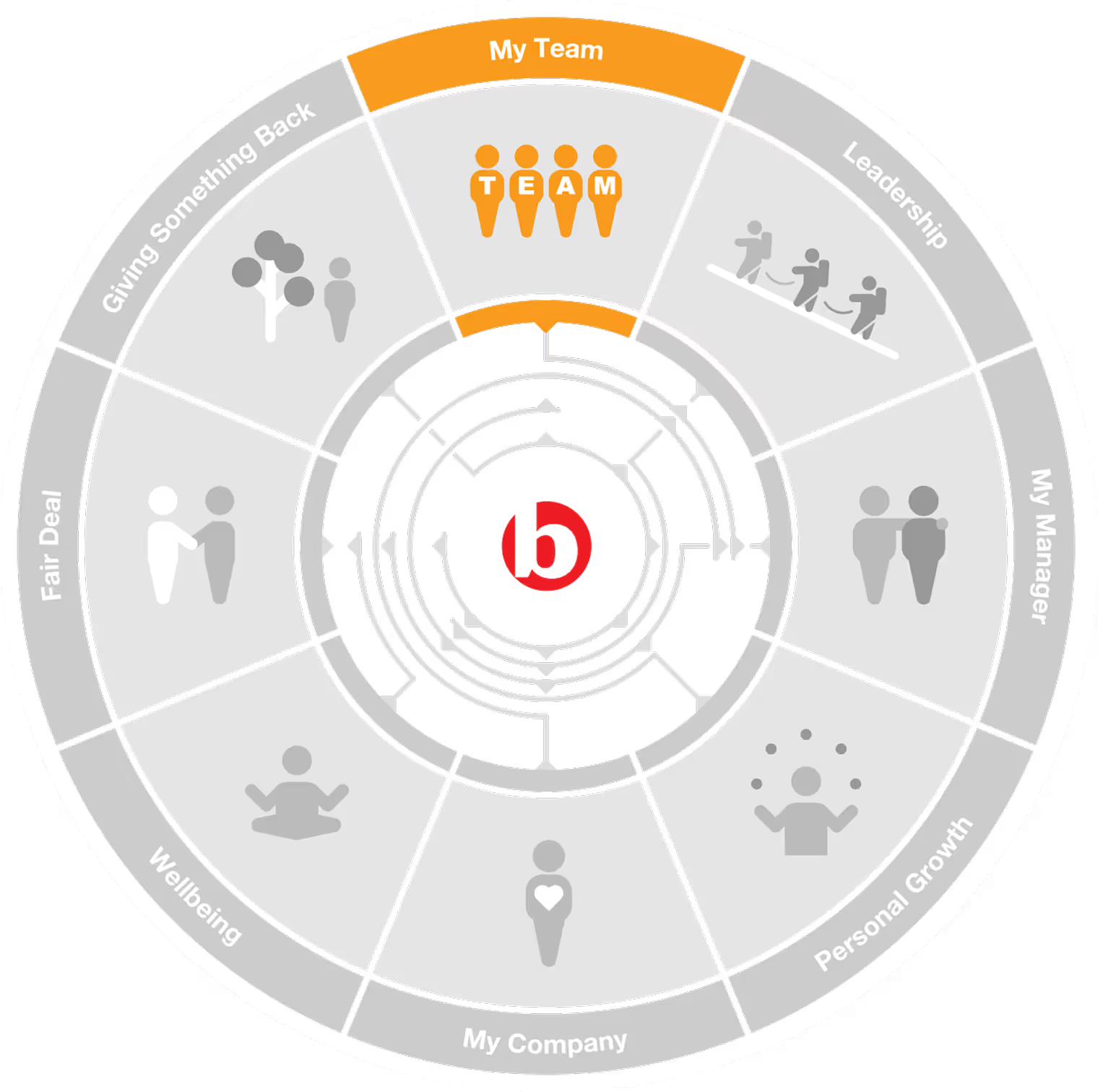
Our approach measures organisational health across eight core areas: My Team, Leadership, My Manager, Personal Growth, My Company, Wellbeing, Fair Deal, and Giving Something Back. Together, they give you a complete view of how your people think, feel, and experience work.
Complete the form and take the first step toward a stronger, more engaged organisation.