
State of Engagement 2026 Report |
Download report




A key message from Jack, the Managing Director shortly follows the fortnightly Senior Management Team meetings to share with employee discussions and decisions made. This promotes transparency and the cascade of important information throughout the Council. He demonstrates through his actions how he wishes to be fairly treated alongside all employees; for example, when the Council tightened up entitlements to payments of car allowances for budget pressures, he relinquished his entitlement to an essential user car allowance and also wrote to the Leader of the Council indicating that because of the economic climate he will not accept any increase in salary for the next 2 years and that, even then, any increase would be subject to the Council achieving its programmed savings for the next 2 financial years.
A key message from Jack, the Managing Director shortly follows the fortnightly Senior Management Team meetings to share with employee discussions and decisions made. This promotes transparency and the cascade of important information throughout the Council. He demonstrates through his actions how he wishes to be fairly treated alongside all employees; for example, when the Council tightened up entitlements to payments of car allowances for budget pressures, he relinquished his entitlement to an essential user car allowance and also wrote to the Leader of the Council indicating that because of the economic climate he will not accept any increase in salary for the next 2 years and that, even then, any increase would be subject to the Council achieving its programmed savings for the next 2 financial years.
A key message from Jack, the Managing Director shortly follows the fortnightly Senior Management Team meetings to share with employee discussions and decisions made. This promotes transparency and the cascade of important information throughout the Council. He demonstrates through his actions how he wishes to be fairly treated alongside all employees; for example, when the Council tightened up entitlements to payments of car allowances for budget pressures, he relinquished his entitlement to an essential user car allowance and also wrote to the Leader of the Council indicating that because of the economic climate he will not accept any increase in salary for the next 2 years and that, even then, any increase would be subject to the Council achieving its programmed savings for the next 2 financial years.


In addition, RCHL internal trainers make arrangements to customise workshops for individual staff teams and groups to best reflect their needs. Staff may also identify specific external courses that meet a particular need and arrangements are made for individuals to attend for example, National Assistive Technology/Telecare training, Developing Outcome monitoring. They are currently piloting a number of e-learning programmes focusing on core mandatory training, to ensure staff are regularly updated, for example Fire safety, Food Hygiene, Manual Handling Staff that wish to undertake an NVQ qualification in Care must have completed all the relevant induction and developmental training before they will be considered to undertake an NVQ with RCHL. The delivery of NVQs to staff is subject to funds received from the external providers. However, funding the Leadership & Management in Care (LMC) (formerly known as the Registered Managers Award) and NVQ4 in Care will be a priority for the organisation. RCHL also supports and funds the Learning Disability Qualification accredited via the Open College Network, the Leadership in Management and NVQ4 in Care qualifications. For staff who already hold an NVQ Level 2 in Care and wish to progress onto the Level 3. This will be subject to the scheme manager's approval in line with the service development plan. All successful applicants will be given support and guidance for attainment of their care qualification from their approved LSC training provider. Senior Management Team continue to source funding opportunities, with the support of external providers and are committed to staff gaining an appropriate qualification that will meet the organisation's core values and CQC requirements. RCHL are also a recognised training Centre with the Open College Network and have reached the highest standards enabling reassessment to be every two years.
In addition, RCHL internal trainers make arrangements to customise workshops for individual staff teams and groups to best reflect their needs. Staff may also identify specific external courses that meet a particular need and arrangements are made for individuals to attend for example, National Assistive Technology/Telecare training, Developing Outcome monitoring. They are currently piloting a number of e-learning programmes focusing on core mandatory training, to ensure staff are regularly updated, for example Fire safety, Food Hygiene, Manual Handling Staff that wish to undertake an NVQ qualification in Care must have completed all the relevant induction and developmental training before they will be considered to undertake an NVQ with RCHL. The delivery of NVQs to staff is subject to funds received from the external providers. However, funding the Leadership & Management in Care (LMC) (formerly known as the Registered Managers Award) and NVQ4 in Care will be a priority for the organisation. RCHL also supports and funds the Learning Disability Qualification accredited via the Open College Network, the Leadership in Management and NVQ4 in Care qualifications. For staff who already hold an NVQ Level 2 in Care and wish to progress onto the Level 3. This will be subject to the scheme manager's approval in line with the service development plan. All successful applicants will be given support and guidance for attainment of their care qualification from their approved LSC training provider. Senior Management Team continue to source funding opportunities, with the support of external providers and are committed to staff gaining an appropriate qualification that will meet the organisation's core values and CQC requirements. RCHL are also a recognised training Centre with the Open College Network and have reached the highest standards enabling reassessment to be every two years.
In addition, RCHL internal trainers make arrangements to customise workshops for individual staff teams and groups to best reflect their needs. Staff may also identify specific external courses that meet a particular need and arrangements are made for individuals to attend for example, National Assistive Technology/Telecare training, Developing Outcome monitoring. They are currently piloting a number of e-learning programmes focusing on core mandatory training, to ensure staff are regularly updated, for example Fire safety, Food Hygiene, Manual Handling Staff that wish to undertake an NVQ qualification in Care must have completed all the relevant induction and developmental training before they will be considered to undertake an NVQ with RCHL. The delivery of NVQs to staff is subject to funds received from the external providers. However, funding the Leadership & Management in Care (LMC) (formerly known as the Registered Managers Award) and NVQ4 in Care will be a priority for the organisation. RCHL also supports and funds the Learning Disability Qualification accredited via the Open College Network, the Leadership in Management and NVQ4 in Care qualifications. For staff who already hold an NVQ Level 2 in Care and wish to progress onto the Level 3. This will be subject to the scheme manager's approval in line with the service development plan. All successful applicants will be given support and guidance for attainment of their care qualification from their approved LSC training provider. Senior Management Team continue to source funding opportunities, with the support of external providers and are committed to staff gaining an appropriate qualification that will meet the organisation's core values and CQC requirements. RCHL are also a recognised training Centre with the Open College Network and have reached the highest standards enabling reassessment to be every two years.


We held a staff BBQ on 9th September 2011 that all staff, family and friends were invited to attend. Locally sourced food proved a hit with many coming back for extra helpings. Games and other fun actives were arranged proving for a very enjoyable evening.
We have implemented a move from Nationally to Locally agreed terms and conditions. Giving us more flexibility to agree pay awards and shape our own benefits and T&Cs. We are also implementing a contribution pay scheme giving employees the benefit of having good performance rewarded. We held a very extensive consultaiton process to get our message across to employees, resulting in all our staff except one agreeing to accept our proposals.
We held a staff BBQ on 9th September 2011 that all staff, family and friends were invited to attend. Locally sourced food proved a hit with many coming back for extra helpings. Games and other fun actives were arranged proving for a very enjoyable evening.
Last Christmas The Children's Society had a carol singing initiative in their London office where they attempted to raise funds for their charity amongst the local community and shoppers.
The theme of this October's Senior Management Team Roadshows was the 2020 Strategy, providing staff with the opportunity to hear as well as contribute to the goals and vision of the organisation. Senior Management asked staff what their involvement means to them giving them the chance to be more involved in preparing plans with colleagues on operational delivery. Nine roadshows took place across England in six locations; London, Birmingham, Manchester, Leeds, Exeter and Southampton. A survey was also sent out to staff to directly feed into the strategy. After staff consultation over childcare costs, The Children's Society has now implemented childcare vouchers for working parents. They can save parents up to £933 a year. The vouchers are a scheme where staff exchange part of their salary for tax and NI-free childcare. Staff have fed into organisational wellbeing and set out their requirements for good occupational health initiatives. The Children's Society has demonstrated its ongoing commitment to the health of its staff and now offers a confidential, free counselling service available to all staff, volunteers and their families. Many factors, including outside work may increase stress. Help has been arranged for free access to a specialist DAS Counselling Helpline. A voluntary employee discount scheme, Xtras has been introduced with offers spanning everyday essentials such as groceries, fuel, clothing and holidays that could make a big difference to staff's bank balance. Xtras is part of the UK's biggest and most generous employee discount scheme.
The theme of this October's Senior Management Team Roadshows was the 2020 Strategy, providing staff with the opportunity to hear as well as contribute to the goals and vision of the organisation. Senior Management asked staff what their involvement means to them giving them the chance to be more involved in preparing plans with colleagues on operational delivery. Nine roadshows took place across England in six locations; London, Birmingham, Manchester, Leeds, Exeter and Southampton. A survey was also sent out to staff to directly feed into the strategy. After staff consultation over childcare costs, The Children's Society has now implemented childcare vouchers for working parents. They can save parents up to £933 a year. The vouchers are a scheme where staff exchange part of their salary for tax and NI-free childcare. Staff have fed into organisational wellbeing and set out their requirements for good occupational health initiatives. The Children's Society has demonstrated its ongoing commitment to the health of its staff and now offers a confidential, free counselling service available to all staff, volunteers and their families. Many factors, including outside work may increase stress. Help has been arranged for free access to a specialist DAS Counselling Helpline. A voluntary employee discount scheme, Xtras has been introduced with offers spanning everyday essentials such as groceries, fuel, clothing and holidays that could make a big difference to staff's bank balance. Xtras is part of the UK's biggest and most generous employee discount scheme.
Fishbowl reward scheme - The purpose of this scheme is to instantly reward behaviour that demonstrates their core CII values and /or shows development of personal competencies. It acts as an incentive as well as a form of recognition. Each department has a 'fishbowl' (lucky dip) containing tokens for a number of rewards such as; cinema tickets, lunch out, half day leave, shopping vouchers etc. A total of 10 rewards are placed in the bowl for each department (and are refreshed as used). When a member of staff is considered, by their manager or department head, to have excelled in demonstrating one of the values through their work, the staff member is invited to pick a reward. This reward scheme runs in addition to the regular bonus scheme and instant recognition (monetary) reward scheme. The scheme has proved popular with both staff and managers being well used with 63 rewards given since the scheme was launched in August 2010. The instant nature of the scheme and the fun and social nature of the rewards marks this scheme out from other rewards on offer in the organisation. It encourages staff to do their best every day and in every part of their work, not just when working on high profile or lengthy projects, and realise that this is recognised and valued.
Fishbowl reward scheme - The purpose of this scheme is to instantly reward behaviour that demonstrates their core CII values and /or shows development of personal competencies. It acts as an incentive as well as a form of recognition. Each department has a 'fishbowl' (lucky dip) containing tokens for a number of rewards such as; cinema tickets, lunch out, half day leave, shopping vouchers etc. A total of 10 rewards are placed in the bowl for each department (and are refreshed as used). When a member of staff is considered, by their manager or department head, to have excelled in demonstrating one of the values through their work, the staff member is invited to pick a reward. This reward scheme runs in addition to the regular bonus scheme and instant recognition (monetary) reward scheme. The scheme has proved popular with both staff and managers being well used with 63 rewards given since the scheme was launched in August 2010. The instant nature of the scheme and the fun and social nature of the rewards marks this scheme out from other rewards on offer in the organisation. It encourages staff to do their best every day and in every part of their work, not just when working on high profile or lengthy projects, and realise that this is recognised and valued.
Fishbowl reward scheme - The purpose of this scheme is to instantly reward behaviour that demonstrates their core CII values and /or shows development of personal competencies. It acts as an incentive as well as a form of recognition. Each department has a 'fishbowl' (lucky dip) containing tokens for a number of rewards such as; cinema tickets, lunch out, half day leave, shopping vouchers etc. A total of 10 rewards are placed in the bowl for each department (and are refreshed as used). When a member of staff is considered, by their manager or department head, to have excelled in demonstrating one of the values through their work, the staff member is invited to pick a reward. This reward scheme runs in addition to the regular bonus scheme and instant recognition (monetary) reward scheme. The scheme has proved popular with both staff and managers being well used with 63 rewards given since the scheme was launched in August 2010. The instant nature of the scheme and the fun and social nature of the rewards marks this scheme out from other rewards on offer in the organisation. It encourages staff to do their best every day and in every part of their work, not just when working on high profile or lengthy projects, and realise that this is recognised and valued.

Taunton School hold an end of year barbecue and farewell drinks. There is also The Armed man Concert at Wells Cathedral for everyone to attend.
Taunton School hold an end of year barbecue and farewell drinks. There is also The Armed man Concert at Wells Cathedral for everyone to attend.
John Newton leads with enthusiasm, energy and belief in what Tauanton School do.


Claud Regnard, one of Consultants has just received a Lifetime Achievement award from Help the Hospices - the national umbrella organisation representing the hospice sector. Claud is renowned regionally, nationally and internationally for his expertise in specialist palliative care. He is also known for sharing his knowledge and learning with colleagues within palliative care. Claud has devised A Guide to Symptom Relief in Palliative Medicine, which is used by professionals aross the world, as a bedside textbook. Claud helped establish the UK's first Macmillan Nursing post for people with Learning Difficulty and they pioneered the development of DisDAT (Disability Distress Assessment Tool). It has been validated by Northumbria University and is now used by over 15 LD and mental health trusts, as well as by university research teams. It is included in the Mencap website and has its own website – www.disdat.co.uk In 1999 Claud developed CLiP. CLiP - Current Learning in Palliative Care – is a flexible education programme aimed at healthcare professionals. CLiP is now widely used in palliative care settings. It is available free online at www.helpthehospices.org and has been formally evaluated by Open University, which showed that it is an effective means of delivering learning and improving learning outcomes. Finally, Claud also devised a clinical response to the potential threat of ‘Pandemic Flu', which was shared with other hospices and and subsequently shaped Help the Hospice advice, as his paper was made available online to all members during the Swine Flu crisis in 2009.
At St Oswalds they believe wellbeing begins with the line manager/staff member relationship, underpinned by a range of support tools that can be accessed by either the line manager or member of staff. Contact and dialogue through one to one sessions and team meetings means that staff wellbeing is monitored on a regular basis. To support this the St Oswalds Staff Support leaflet is issued personally to each new member of staff by the HR Director when they join St Oswalds. She talks through in detail the range of support mechansisms in place to support them during their employment. Two examples are access to complementary therapies delivered by volunteer therapists at very low cost, appointments at end of day to fit in with working patterns, making use of the skills of volunteers. St Oswalds also offer referrals to external counselling with no questions asked about reason for referral so they remain highly confidential. Up to six sessions are offered but can be extended.
Claud Regnard, one of Consultants has just received a Lifetime Achievement award from Help the Hospices - the national umbrella organisation representing the hospice sector. Claud is renowned regionally, nationally and internationally for his expertise in specialist palliative care. He is also known for sharing his knowledge and learning with colleagues within palliative care. Claud has devised A Guide to Symptom Relief in Palliative Medicine, which is used by professionals aross the world, as a bedside textbook. Claud helped establish the UK's first Macmillan Nursing post for people with Learning Difficulty and they pioneered the development of DisDAT (Disability Distress Assessment Tool). It has been validated by Northumbria University and is now used by over 15 LD and mental health trusts, as well as by university research teams. It is included in the Mencap website and has its own website – www.disdat.co.uk In 1999 Claud developed CLiP. CLiP - Current Learning in Palliative Care – is a flexible education programme aimed at healthcare professionals. CLiP is now widely used in palliative care settings. It is available free online at www.helpthehospices.org and has been formally evaluated by Open University, which showed that it is an effective means of delivering learning and improving learning outcomes. Finally, Claud also devised a clinical response to the potential threat of ‘Pandemic Flu', which was shared with other hospices and and subsequently shaped Help the Hospice advice, as his paper was made available online to all members during the Swine Flu crisis in 2009.
You’ve explored the Factors - now discover how your organisation can gain deeper insight into what truly drives engagement and workplace culture.
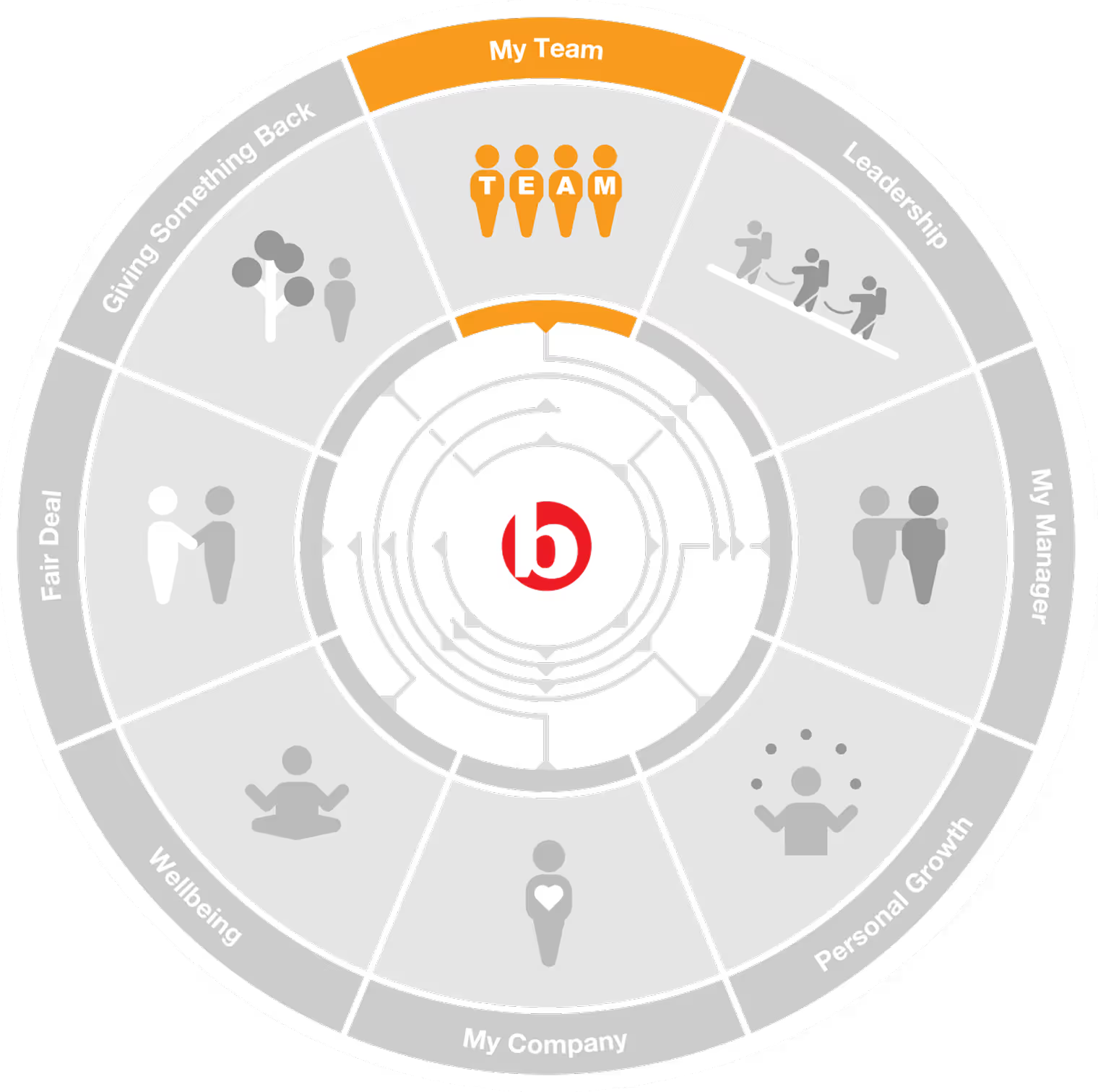
Our approach measures organisational health across eight core areas: My Team, Leadership, My Manager, Personal Growth, My Company, Wellbeing, Fair Deal, and Giving Something Back. Together, they give you a complete view of how your people think, feel, and experience work.
Complete the form and take the first step toward a stronger, more engaged organisation.


