
State of Engagement 2026 Report |
Download report




As a publically funded organisation NHS Improvement is not permitted to spend taxpayers' money on the provision of social events for staff.
NHS Improvement offers up to nine staff per annum the opportunity to attend and (if selected to present a poster) a major international healthcare improvement conference - this includes funding for travel and accommodation. Staff are required to make a presentation to share their learning to colleagues following their return thereby sharing international news and developments in the field of healthcare. In addition, news and updates of successful initiatives and staff achievements are communicated via the fortnightly staff bulletin, monthly national team meetings and the website in order to recognise staff, to celebrate their success and to share learning.
As a publically funded organisation NHS Improvement is not permitted to spend taxpayers' money on the provision of social events for staff.
All staff are contractually obliged to participate in the annual appraisal process and are required as part of peformance review to undertake a minimum of 30 hours of CPD each year. This continues to develop the individual and maintain their subject or relevant area currency. The college appraisal scheme is designed to encourage the member of staff to reflect on their personal contribution each year, to set measurable objectives linked to the development of their area and future business objectives and to identify their training needs which enable the achievement of the objectives. This ensures currency for staff, improves the individual's market worth whilst meeting organisational objectives. Subject and Operational Managers identify the development needs for their areas based on their objectives for the operating cycle. As part of induction, individual training needs are identified for new members of staff. Core competencies are set by the college and new staff are assessed against these to identify early needs.
All staff are contractually obliged to participate in the annual appraisal process and are required as part of peformance review to undertake a minimum of 30 hours of CPD each year. This continues to develop the individual and maintain their subject or relevant area currency. The college appraisal scheme is designed to encourage the member of staff to reflect on their personal contribution each year, to set measurable objectives linked to the development of their area and future business objectives and to identify their training needs which enable the achievement of the objectives. This ensures currency for staff, improves the individual's market worth whilst meeting organisational objectives. Subject and Operational Managers identify the development needs for their areas based on their objectives for the operating cycle. As part of induction, individual training needs are identified for new members of staff. Core competencies are set by the college and new staff are assessed against these to identify early needs.
All staff are contractually obliged to participate in the annual appraisal process and are required as part of peformance review to undertake a minimum of 30 hours of CPD each year. This continues to develop the individual and maintain their subject or relevant area currency. The college appraisal scheme is designed to encourage the member of staff to reflect on their personal contribution each year, to set measurable objectives linked to the development of their area and future business objectives and to identify their training needs which enable the achievement of the objectives. This ensures currency for staff, improves the individual's market worth whilst meeting organisational objectives. Subject and Operational Managers identify the development needs for their areas based on their objectives for the operating cycle. As part of induction, individual training needs are identified for new members of staff. Core competencies are set by the college and new staff are assessed against these to identify early needs.


The leader of Mosscare has a clear passion for and pride in the work of The Mosscare Housing Group. In leading the organisation he seeks to include, engage and listen to staff, customers and other stakeholders so together they can fulfil their vision of “achieving excellence in all they do”. Currently he is undertaking a shadow placement with each of the teams within the Group.
Mosscare's culture and approach to staff engagement is to: - Consult - Listen - Respond - Act. Following this approach develops the trust of staff and gives them confidence to come forward with ideas and suggestions. Mosscare provide three examples of where this approach to engagement has led to positive change: - in the consultation on their 2011-16 Corporate Plan, a staff member encapsulated the approach of Mosscare with the suggested phrase "Pride in our past and passion for our future". These words resonated with the wider staff group and the boards of Mosscare and Mossbank. They were embraced within one of their strategic challenges and featured as the title to the 2010/11 Annual Report; - Their Mosscare in the Community Day, described later in this submission reflected the innovative ideas and suggestions provided by a range of staff from within the group. The success of the day was to a large extent, due to the belief of staff that their ideas had been taken seriously and were making a real difference and impact bringing benefit to local residents and neighbourhoods; - In 2010-11 a proposed staffing re-structure of the organisation was changed significantly following consultation with staff who responded with positive and constructive ideas for a revised structure which was embraced by the organisation as the best way forward. Success has been achieved through the revised structure.
Mosscare's culture and approach to staff engagement is to: - Consult - Listen - Respond - Act. Following this approach develops the trust of staff and gives them confidence to come forward with ideas and suggestions. Mosscare provide three examples of where this approach to engagement has led to positive change: - in the consultation on their 2011-16 Corporate Plan, a staff member encapsulated the approach of Mosscare with the suggested phrase "Pride in our past and passion for our future". These words resonated with the wider staff group and the boards of Mosscare and Mossbank. They were embraced within one of their strategic challenges and featured as the title to the 2010/11 Annual Report; - Their Mosscare in the Community Day, described later in this submission reflected the innovative ideas and suggestions provided by a range of staff from within the group. The success of the day was to a large extent, due to the belief of staff that their ideas had been taken seriously and were making a real difference and impact bringing benefit to local residents and neighbourhoods; - In 2010-11 a proposed staffing re-structure of the organisation was changed significantly following consultation with staff who responded with positive and constructive ideas for a revised structure which was embraced by the organisation as the best way forward. Success has been achieved through the revised structure.


Luminus encourages all employees to be healthy. Their impressive suite of health and wellbeing benefits include an online personal health management system, subsidised gym membership, pension and non-contributory health plan (recently expanded to employees' children). The company believe the most effective wellbeing tool they have is their flexible working policy. Whether it is offering bank workers term-time contracts, or enabling full-time employees to work around rush hour traffic, everyone benefits from this approach. It also ensures that managers are able to monitor their employees' working hours, ensuring a healthy work-life balance. Employees can accrue time and take up to an extra 13 days leave a year, on top of their already generous leave allowance. For some employees, i.e. those with more than five years service, this can amount to up to 43 days (excluding public holidays). Staff are keen to stay with Luminus because of the interest they take in their health and wellbeing, resulting in: an increase in staff retention level to 96.1% (2009: 88.8%), a 40% reduction in sickness absence to 3.4% (8.3% in 2009), and increased staff satisfaction and motivation as evidenced through their 2010 employee survey results.
During Summer 2011 Chan held Premium Brand Employer meetings for all employees over a lunch hour so he could hear views on how they can achieve their 2020 Vision: The Road to Renewal. In these highly interactive weekly sessions he encouraged everyone to be open and honest in their feedback. These meetings greatly impacted on employee engagement as it underlined to all employees that the Senior Management Team were open to constructive feedback. Following these meetings various initiatives have been put in place, including integrating their trades team in their monthly staff conferences instead of holding a separate quarterly meeting for them.
Luminus encourages all employees to be healthy. Their impressive suite of health and wellbeing benefits include an online personal health management system, subsidised gym membership, pension and non-contributory health plan (recently expanded to employees' children). The company believe the most effective wellbeing tool they have is their flexible working policy. Whether it is offering bank workers term-time contracts, or enabling full-time employees to work around rush hour traffic, everyone benefits from this approach. It also ensures that managers are able to monitor their employees' working hours, ensuring a healthy work-life balance. Employees can accrue time and take up to an extra 13 days leave a year, on top of their already generous leave allowance. For some employees, i.e. those with more than five years service, this can amount to up to 43 days (excluding public holidays). Staff are keen to stay with Luminus because of the interest they take in their health and wellbeing, resulting in: an increase in staff retention level to 96.1% (2009: 88.8%), a 40% reduction in sickness absence to 3.4% (8.3% in 2009), and increased staff satisfaction and motivation as evidenced through their 2010 employee survey results.

The company's vision statement really sums up what they do - 'No young person or woman, whatever their problems and background, will be without a comprehensive and holistic package of support, until they are truly capable of sustaining an independent and acceptable lifestyle within their chosen community.' Llamau works hard at realising this vision with each and every service user it comes in to contact with. Often service users are referred to Llamau when no other agency will support them due to varying reasons. Their belief is that they can work with almost anyone and will go that extra mile to finding their worth in society. Research: To ensure Llamau continues to develop the most effective services, they are proud to be participating in several research projects. Two of the projects are part of the Knowledge Transfer Partnership (KTP) programme with two Welsh Universities. The organisations are working together in order to improve services at Llamau by transferring research into practice. Developing housing services which reduce reoffending. Llamau has recently undertaken a two year research, strategy and lobbying project to develop effective accommodation services for young people involved in the Youth Justice System.
Llamau operates a core competency training matrix. Clearly listed is the employer's position with regards to employee development. In the last BEST Company survey they won an award based on the principles of how they operate this development programme throughout Llamau.
Llamau operates a core competency training matrix. Clearly listed is the employer's position with regards to employee development. In the last BEST Company survey they won an award based on the principles of how they operate this development programme throughout Llamau.

The company currently have an annual staff focus awards whereby all staff are able to vote for staff and tenants for specific awards including Employee of the Year and Team Manager of the Year. Some of LMH's tenants and partners are also invited to attend these events and there are specific awards that staff can vote for tenants/partners. The Focus Awards are an important part of LMH's approach to recognising and celebrating the achievements of their staff.
LMH arranged an It's a Knock Out Competition against other Housing Associations. This was held on a Sunday and all staff attended bringing their families along for a fun packed day. The employees were put into teams and competed against other Housing Associations through a variety of assault courses and team tasks. Activities for children and those staff who came to support the event were also put on including hook a duck and other prize winning games. The event also raised a significant amount of money for our local charities.
LMH arranged an It's a Knock Out Competition against other Housing Associations. This was held on a Sunday and all staff attended bringing their families along for a fun packed day. The employees were put into teams and competed against other Housing Associations through a variety of assault courses and team tasks. Activities for children and those staff who came to support the event were also put on including hook a duck and other prize winning games. The event also raised a significant amount of money for our local charities.

The company's managers are well respected within their individual team which is testimony to their fair but supportive outlook with colleagues. Managers consider succession within their teams and encourage individuals to make the most of development opportunities and support provided to get the best from the individuals and to keep them motivated. Through the appraisals and also the applications for the Leadership programme managers will indicate the next likely career move for the individual and will work things into the appraisal to support these ambitions.
The company provide a wide range of learning opportunities to suit different people's needs from e-learning to work shadowing and from external seminars and conferences to a comprehensive internal training programme. In addition to this they have a range of Leadership programmes that aim to take someone through basic management skills through to Senior Management development through the development of key leadership competencies. They have recently started running career coaching sessions and Learning and Development drop in sessions to provide more guidance and support to people on which of the available opportunities are the most appropriate for them.
The company have undertaken a number of opportunities to provide face to face contact and the opportunity for colleagues to ask questions and get answers as well as providing general feedback and input. One example of this is the lunch bag sessions run by the Chief Executive to involve all colleagues in the future direction of the Group. A number of departments have also run drop in sessions, such as ICT and Learning and Development to encourage individuals to resolve queries and get to know internal colleagues, other teams such as Finance are planning to follow suit. The company find that by offering flexible opportunities to come and ask questions in a local setting will encourage more colleagues to get involved with Group activities. In addition for those colleagues who may not want to contribute in a face to face setting they carry out a number of ad hoc surveys internally throughout the year on a variety of topics.

The best example of how the organisation supports employee development is through Kaizen's ‘Professional Learning Framework'. This document was created collaboratively to establish ways of working, for all staff, at all levels, in order to take ownership of and direct their own learning through the support and coaching of their line manager. A key part of Kaizen's support comes from utilising staff skills and strengths to support those who need help in particular areas. This often takes the form of observing other staff members at work, work shadowing or team teaching, with reflection taking a vital role between the two members. They carefully plan the outcomes of their partnership and evaluate the impact of their work together to shape future learning. Kaizen develop coaching skills with all staff, as well as having allocated staff members as designated coaches. Staff attend a range of external courses for a range of purposes in order to develop the individual and the school. This has seen staff training internationally in the USA, France and China, which they then used to impact the organisation. Courses closer to home have also proved beneficial. Kaizen find other organisations that have strengths to match their areas of development or to stimulate their thinking and visit, observe and share learning with them. By using the self directed nature of the ‘Professional Learning Framework', staff not only feel they are supported in their development, but it creates a positive environment for staff to be a part of.
Kaizen works towards high expectations of both adults and children. To ensure the team is driving towards success they carefully recognise and reward individual's efforts. An example of where this is most effective is their extending schools provision - after school clubs. Adults who take on the responsibility of running an after school club are expected to organise, plan, manage the resources, including a small budget and run the club out of their normal working hours. Adults who take up this opportunity have professional support with planning and organisation if needed. This additional responsibility is rewarded by one day's paid leave which can be taken at any point throughout the school year. By introducing this reward Kaizen have found that it encourages more adults to step up and lead an after school provision which in turn means that they can offer a wide variety of out of hours learning opportunities to the children.
Kaizen works towards high expectations of both adults and children. To ensure the team is driving towards success they carefully recognise and reward individual's efforts. An example of where this is most effective is their extending schools provision - after school clubs. Adults who take on the responsibility of running an after school club are expected to organise, plan, manage the resources, including a small budget and run the club out of their normal working hours. Adults who take up this opportunity have professional support with planning and organisation if needed. This additional responsibility is rewarded by one day's paid leave which can be taken at any point throughout the school year. By introducing this reward Kaizen have found that it encourages more adults to step up and lead an after school provision which in turn means that they can offer a wide variety of out of hours learning opportunities to the children.

The organisation operates an open and transparent management style and their 'flat' structure allows quality communications at all levels. The Chief Executive offers free lunches to all employees three times a year when she is willing to explain and outline proposed changes to service delivery, changes that affect staff and any question which employees feel they want to ask. Since the last survey they have ensured all teams have a breakdown on the results and that they share ideas and suggestions to improve the working lives of employees. Examples have been the installation of water coolers and a tuck shop for staff.
Their rebranding has revitalised the organisation as the new logo and name reflect their true identity. This rebranding has contributed and coincided with the winning of new bids and has acted as a re-launch and staff have found this exciting. The rebranding exercise involved many staff working as a project group and this engagement has ensured that the new branding has been well received. The Leader works in an inclusive way sharing issues with managers and discussing solutions to challenges. They have an open, transparent and direct approach and are always available to discuss the way the organisation works. This friendly and open style encourages staff to talk through concerns at an early stage and this often influences final decisions. The 'free lunches' that are run by the Chief Executive also encourages a range of discussions on all aspects on how the organisation is run.
Managers operate a Business Meeting and Leadership Forum, both of which keep managers up to date with changing needs of the organisation and this commitment is reared by informal praise and internal promotions. Many groups of managers are grouped for projects which have been successful in changing how the organisation works. Managers encourage flexibility in working hours and work areas so that wherever possible the needs of individuals can be accommodated. Their friendly working policies also support the culture of the organisation and managers have discretion in applying requests for flexibility. Managers know that a strong team is created by being open about issues so that dialogue takes place to encourage early resolution. By using their appraisal system managers set objectives which are both personal and organisational. Staff are regularly seen through 1 to 1's and supervision so that they can see how their achievements fit into the business plan.

They organise a quarterly new staff lunch where the CEO seeks feedback and ideas from staff who have joined Jewish Care recently. There are also Ask Simon postcards where staff can get in touch with the CEO to make suggestions, give feedback or ask questions. There are also tea and chat sessions where the CEO visits care homes and community centres to chat to staff and volunteers about issues they may have. Since the last survey they have implemented many changes. They have launched their Benefits You booklet giving details of the benefits they offer to all staff, together with their 2011 Reward Statement and have communicated information about bench marked salaries. They have shared results with teams and managers and launched a new leadership award for the manager with the best ‘My Manager' scores - the winner received £500 to use towards their own career development. They are also currently planning a 'not so new' staff lunch for longer serving employees to have lunch with the CEO.
They organise a quarterly new staff lunch where the CEO seeks feedback and ideas from staff who have joined Jewish Care recently. There are also Ask Simon postcards where staff can get in touch with the CEO to make suggestions, give feedback or ask questions. There are also tea and chat sessions where the CEO visits care homes and community centres to chat to staff and volunteers about issues they may have. Since the last survey they have implemented many changes. They have launched their Benefits You booklet giving details of the benefits they offer to all staff, together with their 2011 Reward Statement and have communicated information about bench marked salaries. They have shared results with teams and managers and launched a new leadership award for the manager with the best ‘My Manager' scores - the winner received £500 to use towards their own career development. They are also currently planning a 'not so new' staff lunch for longer serving employees to have lunch with the CEO.
Jewish Care is doing a piece of work called the strategy review. The aim of the project is to hear from everyone, especially staff about what they think Jewish Care should do in the future and develop a strategy. Staff know what works and what doesn't, as well as what might be missing and what else could be done. Simon Morris, the Leader, is passionate about the rights and respects that should be afforded to people less able than themselves and their ability to make a real difference to people's lives. He is a principled, kind and hardworking individual who leads by example. The complexity of leading an organisation like Jewish Care that works in so many different areas and includes 1000 staff, 2500 volunteers and has a budget of £46m a year, should not be underestimated. Simon however remains approachable, honest and down to earth. He leads the organisation in a transparent way with total commitment to the values, while staying in touch with his roots and retaining his humility, sense of humour and open-mindedness.
You’ve explored the Factors - now discover how your organisation can gain deeper insight into what truly drives engagement and workplace culture.
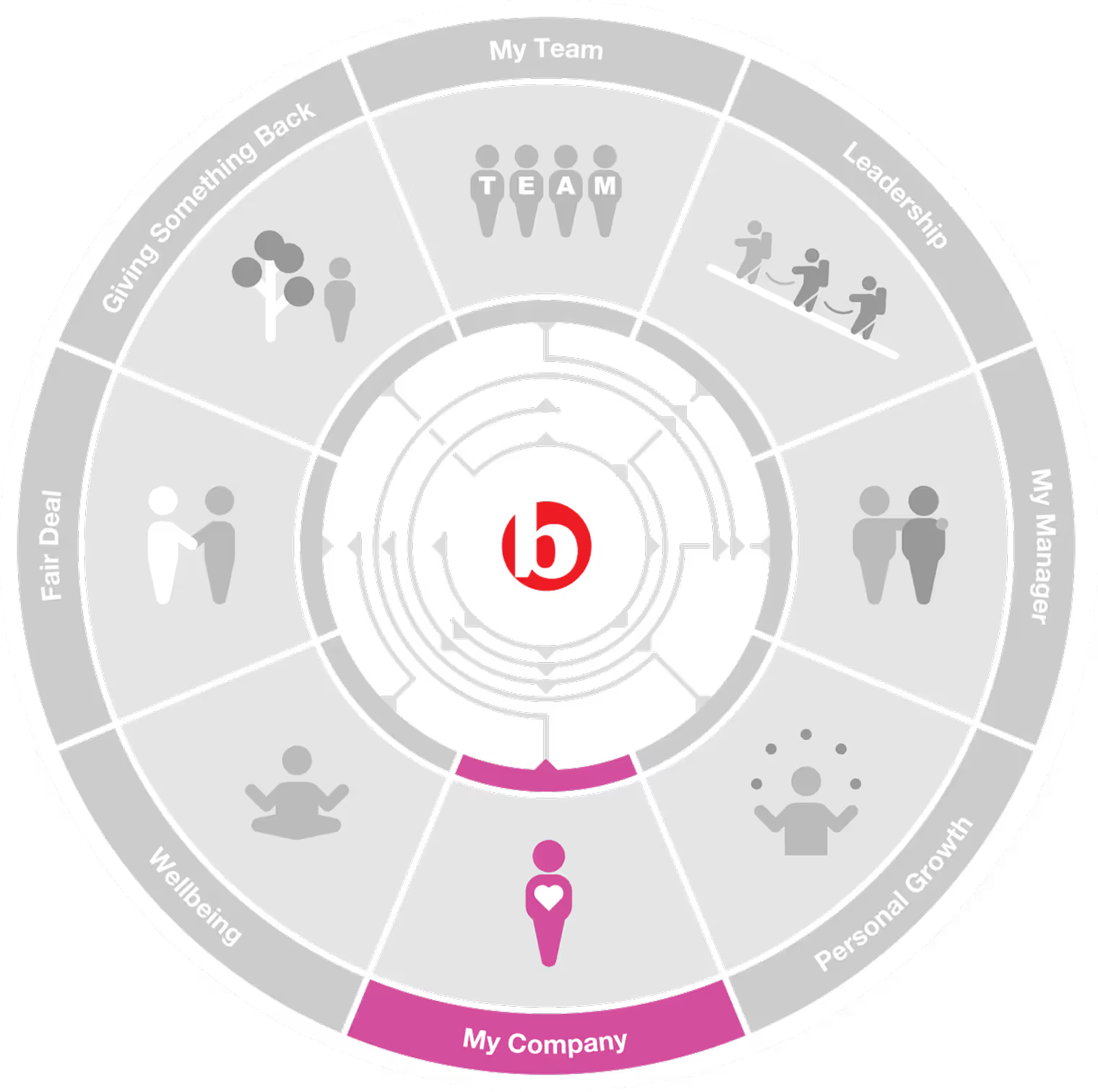
Our approach measures organisational health across eight core areas: My Team, Leadership, My Manager, Personal Growth, My Company, Wellbeing, Fair Deal, and Giving Something Back. Together, they give you a complete view of how your people think, feel, and experience work.
Complete the form and take the first step toward a stronger, more engaged organisation.