




Initiatives such as the Cycle to Work scheme and a city-centre based office to support commuting by public transport are just two of the initiatives Simitive has in place to lessen its environmental impact. Combined with this, it runs a paperless office and employs fully cloud-based IT systems.
After becoming increasingly concerned about the health and wellbeing of its staff during periods of lockdown, the company launched an employee wellbeing programme including 24/7 access to helplines, free counselling sessions, ensuring holidays and breaks were taken, as well as access to confidential conversations with Heads of Department, HR, and Directors.
In order to keep a culture of collaboration and interest during the pandemic, the company held regular meetings on a company and team level, as well as coffee mornings and fun events such as Taskmaster. These were all held in addition to weekly 1-2-1s for all staff members, as well as six monthly development reviews.


A staff forum network, known as ‘Gateway Together’, exists to raise awareness of diversity and inclusion in the workplace. Designed to promote a constantly evolving positive and inclusive culture, it has led to a number of events initiatives including Eid celebrations, Pride, Men’s Health, Black History Month, and International Women’s Week.
Gateway’s office refurbishment included a new recycling system, as well as other initiatives that focused on a commitment to mitigating its impact on the environment. These include LED lighting, the use of hybrid vehicles and electric charging points, as well as a ‘Cycle to Work’ scheme and a bike loan initiative.
Collaboration and inclusion activities consist of weekly team briefings internally, as well as a number of external team bonding activities. These include taking part in virtual ‘escape rooms’, as well as the establishment of a ‘Birthday Month Club’ to encourage celebration across different teams.


William Blair's Global Inclusion Council, created in 2017, is an advisory group of colleagues responsible for defining the firm's inclusion strategy and priorities to create a workplace where people are encouraged to bring their individual perspectives and experiences to work to drive greater creativity.
During the pandemic, it was important to keep employees up-to-date and to promote team bonding. William Blair launched a microsite dedicated to Covid-19 updates and a special edition of the firm's global electronic newsletter, Inside William Blair@Home.
Each employee received a food voucher that could be used for home deliveries while working from home. The company has a strong employee assistance programme to support every member of the workforce. Laptops were issued to all staff to enable the team to work from home over the past year.


UKCloud is committed to supporting employees' development, ensuring that it is tailored towards each staff member's specific ambitions and career path. A buddy system for new recruits provides a career mentor for people as they embark on a five-week programme of on-the-job training.
Colleagues found new and interesting virtual ways to use their social budget – £75 per head every quarter – while operating remotely. UKCloud believes this initiative has been pivotal in helping to maintain strong team interaction during a challenging year.
A Health and Wellbeing Week in January 2021 promoted practical strategies for feeling better. Senior leaders got behind the initiative, encouraging staff to exercise during the cold winter months. They have also been active in continuing to break down the stigma associated with mental health.

Every second Wednesday, staff have the afternoon off to work on personal development projects alone or in groups. They show off their projects in a regular video series and monthly newsletter. Each employee also has £300 to spend on courses and resources on the online learning platform Learnably, launched in December 2020.
One of the lessons of lockdown was that the more people communicated outside their day job, the more productive collaborations they had on important projects. Mediatonic recognised its teams had different rhythms and stopped organising fun events such as quizzes and tea breaks in favour of empowering groups to host events of their own design.
Mediatonic is a founding partner for Safe in Our World's new campaign, #LevelUpMentalHealth, which seeks to unite the gaming industry to support both players and developers who may be struggling silently with their mental health. The company has also set aside money to support two charities fighting racial inequality in the UK.


Thrive Homes switched quickly to being a remote business last March. The Chief Executive, Elspeth Mackenzie, took to the internal social network OneThrive to provide business updates and advice on public health guidelines. Workplace by Facebook was also used to keep staff informed.
The Lumina Spark programme is used to develop people's understanding of themselves and others. It provides tools to constructively share, challenge, debate and give feedback, and to enhance emotional intelligence when interacting with colleagues and customers. Managers draw on its insights in the growth of their teams.
Inspired by a two-minute video from New Zealand prime minister Jacinda Ardern, managers took part in a 15-second challenge, #PrideinThrive. Each of them filmed themselves talking about what they were most proud of and grateful for. The clips were posted on the firm's internal social network.

The Howard de Walden Estate promotes training and development within the wide-ranging roles in the property company, including tiers of management. Support is also available for further education where applicable to the role and the individual employee.
Daily and weekly meetings kept teams bonded in the past year using cloud technology that the company already had in place. Team members also got together online to boost morale with virtual cocktail evenings and a book club.
A personal trainer kept employees on their toes with weekly workouts, recipes and advice for staying healthy during lockdown. Excellent health benefits for staff at The Howard Walden Estate include 24-hour access to mental health advisers.

Teamspirit's culture of collaboration allowed the senior leaders to implement decisions quickly and effectively under high-stress, chaotic conditions as the coronavirus crisis developed last year. They road-tested a pandemic disaster recovery plan with all employees in February and implemented flexible working.
After a survey showed that 59% of staff feared that remote working might slow their career and personal development, the agency raised the visibility of its extensive training programme and celebrated promotions (19% of the 70-strong team were promoted last year). In the next survey, 59% shrank to 19%.
Staff vote anonymously in the quarterly peer group rewards scheme, which honours team members who have made a difference through living the company values. The six people with the highest number of nominations receive a £600 voucher and get to hear the often moving comments of colleagues who nominated them.



During the pandemic, leaders have used constant communications with employees. They have contributed to morale through the company's increasing corporate and social responsibility initiatives. The company's leadership has led by example and remained accessible to employees throughout.
During lockdown, a pets' hour gave staff the chance to introduce their pets on video calls to your colleagues. A virtual MasterChef allowed people to share cooking skills and a social club formed at the digi pub.
The company introduced team initiatives such as yoga and mental wellbeing sessions. It also tried to reduce unnecessary meetings and give employees more of their time back.

The company has introduced an official development scheme, called #TrainToGain, which is founded on a philosophy of self-development and empowers staff to take ownership of their progression. It will support employees working towards industry qualifications as well as continuous professional development activities.
At Christmas, the elves from the Source Community Team asked all staff what was top of their Christmas wish lists, then wrapped the presents – valued at up to £100 each – and delivered them by courier. Staff posted videos and photos of themselves opening and enjoying the gifts.
Source has introduced a “Me Day” that can be taken spontaneously by staff to boost their mental wellbeing by recharging or relaxing. The day does not count as sick leave, and was promoted to employees even while they were working from home.
Management performance is assessed on a six-monthly basis. The key performance indicators include: rate of productivity, response rate to feedback, relationships with external interested parties, working environment of the organisation, planning and risk management, and amount of profit.
Every team member was asked to contribute to the weekly Zoom meetings and the company took their comments into account when planning or implementing policies. This helped to ensure wellbeing was monitored so action could be taken if anyone was struggling to cope with work or the challenges of Covid-19.
The company supports Severn Angels Housing & Support, a charity that provides accommodation and support for homeless people to enable them to be more independent. It focuses particularly on women in the West Midlands and Worcestershire. Staff have organised fundraising raffles and donated clothes.

To help staff return to the office, Salix hired parking spaces near its HQ to allow those with a car to drive in. Also it gave staff a £500 bonus to put towards something to help their mental wellbeing, such as yoga classes, while transitioning from working from home.
Salix has an unusually high number of female employees: the chief executive and 60% of the managers throughout the organisation are women. Just over a quarter of staff are from BAME backgrounds, with the workforce including staff from all over the world.
Staff were allowed to spend at least one day a week volunteering to help local individuals and community groups during the pandemic. The chief executive clocked up 280 hours of being available to shop and collect medicines for vulnerable adults who were sheltering.

SafetyCulture gave staff two recharge days (paid days off) and introduced “Summer Fridays” where employees finished at 2pm. Staff were sent restaurant DIY kits for the virtual Christmas party and team leads have a quarterly budget to organise team birthday and anniversary gifts and drinks and dinners, currently virtually.
SafetyCulture usually holds an annual event called ShipIt, flying all employees off to an international location for a week of collaboration, innovation and learning. It was in New Zealand in 2018. Last year, the Manchester team created its own mini ShipIt hackathon with workshops, speakers, barbecues and activities.
SafetyCulture created a virtual pub called Wolfpack Inn with various rooms for people to join every Friday night to mimic the feeling of going to different bars. It also sent staff monthly gifts, including hampers with champagne and home-baked goods, wellness boxes during Wellness month and Christmas sweaters.

Fortunately, risual did not have to make any Covid-related redundancies, and staff on furlough – whose pay was topped up to 100% – remained actively engaged with the business via team meetings, company update calls and daily catch-ups, along with investment in their personal development. All colleagues took part in virtual social events too, such as quizzes and competitions.
With the 2020 Olympics postponed the virtual risual Olympics was born, formed of cross-divisional teams that sparked communication. The company encouraged all employees to be mentally and physically active during the pandemic, hosting varied activities from running, walking and cycling to reading books, watching films and a guess the baby challenge.
The risual founders took the company's social responsibility a step further in 2020, forming a charitable foundation. Work towards its aim of giving back to people, communities and businesses has already begun with the launch a careers club, designed to help people get back into work by deploying risual employees' knowledge and experience.
Recycling Technologies has a lot of staff from overseas with no family in the UK, so the company provided support such as food deliveries and information about local activities they could enjoy during lockdown. Staff on furlough had a buddy to stay in contact with.
An apprenticeship scheme was launched during the pandemic, with seven recruits in the first cohort. The company ran virtual internships over the summer for 12 students and took on seven one-year placement students. Each staff member has a training budget that can be spent on professional courses or academic qualifications.
Recycling Technologies has changed its internet search engine to Ecosia, which spends 80% of its profits on planting trees in some of the harshest environments on Earth. During lockdown, the company supported local care homes with a postcard scheme for residents who could not receive visitors.

During the first quarter of 2021 plan.com has focussed on its core values: trust, passion and excellence, harnessing the help of motivational speakers Jason Fox, Ranulph Fiennes and Dame Kelly Holmes to communicate the messages. The quarter's top two ‘weekly heroes' win a luxury trip, which they can jet off on when restrictions allow.
The work-hard-play-hard ethic is ingrained at plan.com and the social calendar has remained packed with virtual events that have included cook-a-longs, family fun nights and an awards evening. Surprise gifts from the company, such as care hampers and Easter eggs, have also helped keep team spirit high.
While most large-scale activities happened on Zoom last year, staff at plan.com were able to go ahead with their Santa's on a Bike fundraising event in December – because the Isle of Man was Covid-free. Every employee takes part in the annual charity ride, and in 2020 they raised £31,000 for the Isle of Man hospice.
Managing director Sam Mudd led from the front as soon as the government advised people to work from home, sending regular videos recorded on her phone to keep people up to speed on issues such as getting hold of home office equipment. She also sent business updates and recommended Ted talks to keep people motivated.
A Friday quiz at 4.30pm has kept colleagues interacting over the past year, the £50 prize up for grabs donated to the winner's chosen charity. Staff have also united for virtual fitness classes, bingo sessions and ‘tea and toast' chats, while funny hats have lightened the mood of some team meetings.
Recognising that not-for-profit organisations were being hit hard by lockdown, due to the lack of fundraising opportunities, Phoenix extended its Azure Essentials Managed Service to these clients for free to help keep their IT systems running. All employees have a day per year to volunteer.

Managers helped people set up home offices during the pandemic and organised regular team meetings and online updates. Employees were given options to work flexibly to support home schooling or looking after dependants. New technology was brought in to facilitate e-learning and training management.
More regular company meetings and one-to-ones have been introduced, at which everyone is encouraged to use their camera. There are plans to divide the business into teams across functions and countries, to help build relationships and ease communication between staff who would otherwise have no opportunity to interact.
PHASTAR has a paperless office policy under which files are digital wherever possible. Last year digital signature was introduced for internal forms to reduce the need to print out documents. Offices have energy-saving lights and sensors to limit unnecessary usage, and recycling is the norm.
Orwell embraced technology in bringing together disparate colleagues during the pandemic. Facebook Workplace was a big hit, providing a hub for information, motivation, celebration and social activities, such as Christmas charades and a best onesie wearer competition. The association invested in 144 laptops to help staff stay in touch.
A therapist was brought in for four months to help staff traumatised by a Covid-19 outbreak in their workplace. Additional wellbeing resources were introduced for all staff during the pandemic, including free NHS health checks, weight management and stop smoking support.
Alongside a generous suite of benefits, there are personalised rewards. To thank a colleague for solving an issue outside his normal hours, the CEO arranged a meal for him and his wife at their favourite restaurant. Wellbeing tokens, given to reward and thank colleagues, can be used at local businesses.
Sales-focused though Optimus Search is, not only financial big hitting earns rewards; every month a different incentive award recognises contributions in areas such as going above and beyond to help colleagues or reaching non-financial goals. Rewards include extra holidays, vouchers, a gift of choice or points towards the next incentive trip.
Weekly training sessions for each team focus on sales-related group coaching, while lunch-and-learns incorporate more ‘life' elements – such as how to buy a house or understanding credit ratings – tailored to support young employees. Team members are brought up through the business under the guidance of director Richard Eggleston and new managers receive both in-house and external training.
Colleagues recorded congratulatory videos for each other to celebrate achievements and special occasions such as birthdays and work anniversaries during lockdown. A daily social group call helped keep team spirits lifted, plus there were quizzes, bingo nights and virtual games.

Staff were kept informed about health and safety issues and Oprema's sales figures during the pandemic. Update meetings took place on Microsoft Teams and, on the social side, there were remote quiz nights. Managers maintained contact and recognition by sending gifts to staff in the post.
Microsoft Teams and WhatsApp groups help colleagues to communicate with each other when they are not at work together. Company e-cards, which were designed in-house, have been a hit and enable the team to say thank you, well done and happy birthday.
Mind Cymru remains the company's charitable partner this year as it was unable to raise as much money in lockdown-affected 2020 as in previous years. In 2019 it donated nearly £10,000 to Macmillan Cancer Support. During the pandemic, it raised funds through the on-site tuck shop which it ran.
Engineering recruits who were not fully trained at the start of the pandemic were able to continue their development through virtual training sessions. The company invested in new camera equipment to help trainers using Microsoft Teams. Staff can also access learning material via the Workplace platform.
Openreach introduced #ThankYou days, where people tagged others who had supported them through the pandemic. Microsoft Teams, Workplace and emails were used to provide information and advice to staff, many of whom were working from home, and there was a “let's beat loneliness” campaign.
Colleagues who excel are recognised for their performance: managers can nominate individuals for a £50 reward and teams can share up to £500. When the annual awards ceremony was switched to a virtual event, the firm sent hampers to winners' houses so their families could enjoy the celebrations.

LTE uses a performance appraisal process to measure manager performance throughout the year. This is based on a number of key factors including contractual compliance, learner achievement and staff engagement – and the group's Best Companies results support these action plans. LTE aims to develop its performance management process further over the coming 12 months.
A core LTE value is being one team, with staff collaborating and contributing to company goals. The organisation's senior leadership team of around 60 people represents its current and future leaders and meets times a year to share performance and development.
Each month or so there have been group-wide team sing-alongs and mini-competitions to raise everyone's spirits. Many Teams groups were set up to prevent people from feeling isolated – especially those working at home, and a fitness challenge helped competitive colleagues to track their overall kilometres and achievements.

There is a simple ethos for training and development. LPF supports 100% any training that is required for people to do the work; any training that helps a colleague do their job even better; and any training that helps a colleague develop into a future role.
Technologies such as Zoom and Teams have been embraced by staff, who use them for collaboration, interaction and socialising. An informal chat lounge is very popular for sharing photos and memes, while team quizzes ensure people can stay in contact. The Christmas market was a virtual treat.
LPF increased the frequency of its recognition scheme from annual to quarterly. Staff can nominate someone who has gone the extra mile by helping a member or colleague or by thinking outside the box. Winners receive a Social Stories Club hamper, a branded pen and a certificate.

For anyone who was furloughed, the company organised training through the learning and development team and worked closely with their managers to ease them back into work. It encouraged every employee on furlough to learn a new skill that could support them on their return to work.
The bespoke Launch programme caters for people's individual learning needs. Each employee is assigned to a course which they complete over a number of months. The delivery is increasingly and sometimes wholly online, using tools such as Zoom to ensure content is delivered in an engaging manner.
The LHi Global Challenge, launched during Mental Health Awareness Week, connected people across the group and encouraged them to run, walk or cycle. During the pandemic there were virtual race nights, escape rooms, bingo, quizzes, workout classes, coffee breaks, book clubs and guitar lessons.

Additional programmes have been rolled out to support managers, including Managing Insiders, which provides training on recruitment, communication, managing performance, managing conflict and employee engagement. Managers are additionally offered the chance to complete an MBA on a part-time basis. Regular “round tables” allow managers to raise any issues of concern.
Founder Simon Martin has led from the front on the company's diversity policy, launching a Changemakers programme to coach employees on what it means to be anti-rascist, not just non-rascist. More than 40 changemakers have been trained and a dedicated Diversity & Inclusion lead hired.
Team interaction has not been curbed by the pandemic with the company introducing a range of initiatives including a weekly kid's club for work-at-home parents, exercise sessions, dance classes and entertainment from a comedian and a professional singer. Online mixology classes and a “Quarantini” virtual bar night have proved popular.

Huel says it likes to have fun in the workplace and has set up “amusement alliances” of three people from each office to run social events for six months, giving them a budget and project management responsibility that encourages negotiating and presentational skills.
Every month, teams use a specially-created app to put forward two members who they think have done an outstanding job, in accordance with company values, for the “Huel Of Fame.” Senior managers choose two employees every month for a £1,000 award.
1% of company profit is given to initiatives that support sustainable nutrition such as Eat Forum, a science-based initiative aiming to transform the global food system. Employees are to be encouraged, once the pandemic is over, to give a working day per year to tree planting or working at a food bank.

Team leaders – and all employees – were able to access coaching and mentoring throughout. GMCA also piloted a reverse mentoring scheme and initial feedback has been excellent. It organised resilience workshops for all staff, as well as specific training around resilience for managers.
GMCA has continued with operational training, after an initial pause at the start of the pandemic. Now done in a Covid-safe way, development moved online through e-learning, webinars, and other platforms. The organisation received excellent feedback after two very well-attended events, ‘Learning at Work' week and a ‘Festival of Learning'.
Lots of teams do lots of different things to try to replicate some of the things they are missing about the office, including randomised coffee meets, huddles, quizzes, escape rooms and more. GMCA has installed new audiovisual equipment at all fire stations to support firefighters with group training, communications, and debriefs.

Fresenius Kabi encourages an open-minded creative can-do culture that offers employees of diverse cultures and backgrounds a wide range of fulfilling and challenging career and personal growth opportunities, domestically and internationally.
Motivated and dedicated teams work well together, supporting each other and encouraging each other. Empowerment and a strong team spirit are embedded in the culture.
Last year, Fresenius Kabi Germany gave €20,000 (£17,400) to the GoBanyo initiative which helps homeless people in Hamburg. The GoBanyo shower bus offers people the opportunity to shower free of charge and supply themselves with clean towels, clothes and hygiene products.

Every month two staff exemplifying the company values are presented with champagne and shopping voucher by chief executive, Enrico Sanna, at the all-company update and Fora has a “Team Takeover” every fortnight where different departments create some entertainment for the company on that day
As an alternative to its annual ForaFest weekend away, the company sent staff food and drinks and organised a pizza cook-along, cocktail making class and interactive activities including musical Bingo. It also announced the winners of the Golden Palm awards for outstanding contribution.
Fora encourages biodiversity by building bat boxes, beehives and bird houses and ensures plants in its gardens are bee friendly. Fora only buys food or toiletries that are free from palm oil as well as local produce from ethically sourced suppliers and it uses renewable energy for its electricity.

Staff get three working days a year to spend on learning and development and last year this was expanded to include volunteering. Farewill also runs remote Friday 5s where people sign up to talk for five minutes about something they have learned that week.
Farewill has sent staff care packages with goodies including desk plants and exotic teas to make working from home a little more fun. A number of non-work social channels have also been introduced on topics from photography and video-games to food and meditation along with film and book clubs.
Farewill has introduced virtual coffee roulettes using an app so team members can have regular coffee meetings with people across the organisation and the Hallway chat app notifies staff to take breaks during the day to encourage water cooler conversations.

For the first time, Equinix has been named as one of Fortune Magazine's Most Admired Companies – those with the strongest corporate reputations based on a poll of top executives, directors and analysts. Its EBX (Employee Business Exchange) forum enables nominated representatives to discuss strategies and ensure transparent, effective communication with employees.
Staff interest groups quickly sprang up on Yammer with people sharing personal moments, fun photos, and, of course, communicating about the business. Zoom quizzes and virtual drinks continued hallway conversations. The MD hosts two coffee catch-ups a week with his team and encourages others to do the same.
This year Equinix donated a total of £54,339 to 205 good causes. Food was gifted to The Chapel in Surrey, which went to 150 families; staff backed a joint project between St Mary's Church in Ash Vale and a local coronavirus support group; and raised nearly £1,500 in October's Race Against Hunger.

A RISE values system – do the Right thing; make a positive Impact; keep it Simple; and always Evolve – shapes the EKM culture and attract the best new talent, recruited mainly using job boards, LinkedIn, and by scouting Stem (science, technology, engineering and mathematics) graduate fairs.
Employees can recognise their colleagues in a “Wheel of Heroes” initiative, to tell them how appreciated it was when they helped out. Names go into a draw and the winner gets to spin the Wheel of Heroes for prizes of anything from £1 toilet roll to £100 or a day's holiday.
EKM has donated to various charities over the past year, including Save the Children. The company also works closely with local schools and CEO Antony has given speeches by video link to classes on building your own business.

The single most important method to gauge a manager's performance or success is through their team and peers. The company says if it had to choose one measurement of leadership it would be team engagement, and how the team thrives with its manager.
Lockdown gave the business the opportunity to stop and reflect on the training offered and the result was a complete overhaul of the online training system, moving to a new system with increased content compatibility and accessibility for all. The drpg Academy was also relaunched as the home for all development needs.
People at the company felt everyone was in unprecedented times together and so the focus was on open conversations, transparency and regular updates. Every week saw a TV-style programme give news on what was happening, how drpg was doing, what needed doing, and with people able to ask questions and comment

Kavi and Shamil undertook monthly catch-ups with all the Babu (management) teams and the new Dishoom Delivery Kitchen workforce. Their priority was to keep employees reassured and informed. More than that, Shamil held a weekly virtual yoga class for anyone on staff to take part in.
Dishoom introduced Flow, a new training app, to provide training for café teams following the extended period away from work. Additionally the company created comprehensive corona safety standards, everyone has taken part in Covid safety training, and people will be made aware of all the required measures going forward.
After communications went online the company wanted to give its people something tangible to hold so the Dishoom Samachar – its own newspaper – was launched. It was delivered to every team members' home. There was also a Zoom kids' party for Chote Dishoom Wallas (the team's children), with a personalised invite sent to their homes.

When Steve Hughes started as chief executive in April 2020 there was no option to meet people face to face so he did it virtually through weekly Zoom coffee breaks, attending team meetings and webinars. By the end of December, he had also Zoomed with people from all 69 branches.
The Society's bonus scheme is based on its performance across measures including member service, people and community engagement and risk management. The scheme recognises that all employees contribute to and should share in the Society's success and they all receive the same percentage of their salary, 10% last year.
A Society dog show which got hundreds of entries and a Whodunnit competition were among the many innovative events that kept employees' spirits high last year. Staff also took part in fancy dress team meetings, quizzes, photo and baking competitions, virtual breakfasts and a book group.

To spread some Christmas cheer, the firm held an online Christmas party which involved a wine tasting for employees and their partners. All employees also received a hamper, a John Lewis voucher and a thank you note in appreciation of their hard work in 2020.
To boost morale, get people together and help support each other and share experiences, employees set up a range of fitness, cooking and cake-making clubs. People can drop in to Weekly Cake Tuesday on Teams, an open forum for staff to share news.
Employees volunteered their time to help out in the kitchen at Winchester Churches Nightshelter on a regular basis last year. At Christmas, Clevertouch employees also raised £250 to provide the residents of two moving-on homes with everything they needed for a festive feast.

The mission is to be a housing association motivated by Christian and social concern to create places where people want to live, invests in good quality housing and provides affordable support and servicesthat are accessible to those in housing need.
Christian Housing believes in developing its staff internally through individual training or job shadowing. Staff are given the opportunity to “act up” as managers to cover maternity leave or sickness absence. E-learning sessions on GDPR, whistleblowing, business continuity planning and Equality, Diversity and Inclusion are available.
Every month, employees are invited to an ‘All Hands' Zoom meeting with senior managers providing business updates and providing an open forum for questions. Weekly virtual coffee meetings are held for colleagues to chat informally and a staff member runs weekly mindfulness video calls.

Senior leaders communicate with all staff on a weekly and monthly basis to share business and market updates in person, if virtually. This includes open and live Q&A and feedback sessions, with full employee participation. An open-door policy has been extended to virtually directly access MD James Hardy and his team.
Prior to the pandemic, CCS Media had already implemented virtual employee group “huddles” every morning that took in direct team members – and with senior leaders periodically joining the calls on a rolling basis. This is replicated throughout the business for management.
The company organises multiple weekly social and wellness initiatives – mindfulness, fitness and social – for employees and their children, who get treats like colouring books sent out. Hampers with a choice of contents are distributed to people's homes for individuals and families to enjoy.
You’ve explored the Factors - now discover how your organisation can gain deeper insight into what truly drives engagement and workplace culture.
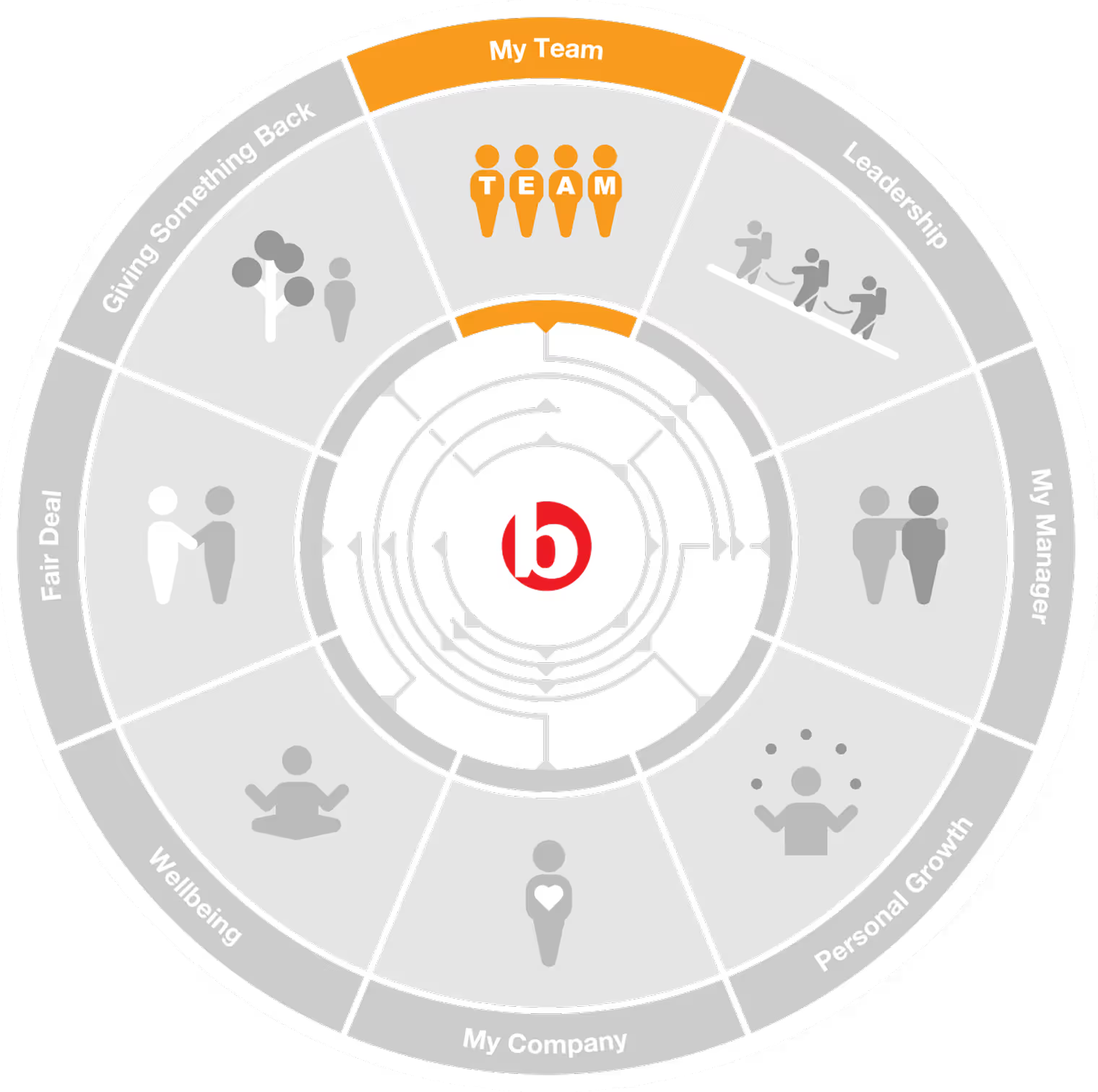
Our approach measures organisational health across eight core areas: My Team, Leadership, My Manager, Personal Growth, My Company, Wellbeing, Fair Deal, and Giving Something Back. Together, they give you a complete view of how your people think, feel, and experience work.
Complete the form and take the first step toward a stronger, more engaged organisation.


